

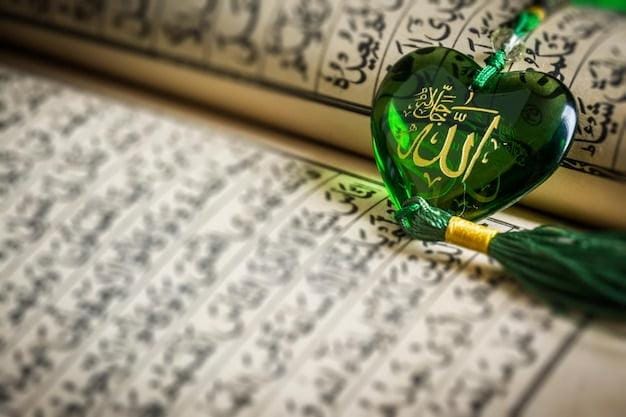
The Significance of Asma ul Husna
Asma ul Husna is a term that refers to the 99 beautiful names of Allah, the Creator and Sustainer of the universe. These names are not just arbitrary titles, but they reflect the attributes and qualities of Allah that He has revealed to His creation through His words and actions. By learning and understanding these names, we can get to know Allah better and worship Him in the best possible way.
Divine Sources: The Quran and Sunnah
The sources of Asma ul Husna are mainly the Quran and the Sunnah, the teachings and practices of Prophet Muhammad (peace be upon him). Allah has mentioned some of His names in various verses of the Quran, such as:
- He is Allah, the Creator, the Inventor, the Fashioner; to Him belong the best names. (Quran 59:24)
- And to Allah belong the best names, so invoke Him by them. (Quran 7:180)
- Allah there is no deity except Him. He has the Most Beautiful Names.. (Quran 20:8)
Prophet Muhammad (peace be upon him) also taught many of Allah’s names through his sayings and supplications. For instance, he stated:
- Allah has ninety-nine names, i.e. one-hundred minus one, and whoever knows them will go to Paradise. (Sahih Bukhari)
- There are ninety-nine names of Allah; he who commits them to memory would get into Paradise. Verily, Allah is Odd (He is one, and it is an odd number) and He loves odd numbers. (Sahih Muslim)
- O Allah, I ask You by every name belonging to You which You named Yourself with, or revealed in Your Book, or You taught to any of Your creation, or You have preserved in the knowledge of the unseen with You. (Hisn al-Muslim)
Thirty Attributes of Allah and Their Meanings
The scholars of Islam have derived the rest of Allah’s names from various sources, such as the names that Allah has called Himself by in the Quran, the names that the Prophet Muhammad (peace be upon him) has used to describe Allah, and the names that are implied by Allah’s actions and attributes. Some examples of these names are:
- Al-Malik: The King and Owner of Dominion
- Al-Quddus: The Absolutely Pure
- Al-Salam: The Perfection and Giver of Peace
- Al-Mu’min: The One Who gives Emaan and Security
- Al-Muhaymin: The Guardian, The Witness, The Overseer
- Al-Aziz: The All Mighty
- Al-Jabbar: The Compeller, The Restorer
- Al-Mutakabbir: The Supreme, The Majestic
- Al-Khaliq: The Creator, The Maker
- Al-Bari: The Originator
- Al-Musawwir: The Fashioner
- Al-Ghaffar: The All- and Oft-Forgiving
- Al-Qahhar: The Subduer, The Ever-Dominating
- Al-Wahhab: The Giver of Gifts
- Al-Razzaq: The Provider
- Al-Fattah: The Opener, The Judge
- Al-Aleem: The All-Knowing, The Omniscient
- Al-Qabid: The Withholder
- Al-Basit: The Extender
- Al-Khafid: The Reducer, The Abaser
- Al-Rafi: The Exalter, The Elevator
- Al-Mu’izz: The Honorer, The Bestower
- Al-Muzil: The Dishonourer, The Humiliator
- Al-Samee: The All-Hearing
- Al-Basir: The All-Seeing
- Al-Hakam: The Judge, The Giver of Justice
- Al-‘Adl: The Utterly Just
- Al-Latif: The Subtle One, The Most Gentle
- Al-Khabir: The Acquainted, the All-Aware
- Al-Haleem: The Most Forbearing
The 99 Names of Allah
Ar-Rahman, Ar-Raheem, Al-Malik, Al-Quddus, As-Salam, Al-Mu’min, Al-Muhaymin, Al-Aziz, Al-Jabbar, Al-Mutakabbir, Al-Khaliq, Al-Bari’, Al-Musawwir, Al-Ghaffar, Al-Qahhar, Al-Wahhab, Ar-Razzaq, Al-Fattah, Al-‘Aleem, Al-Qabid, Al-Basit, Al-Khafid, Ar-Rafi’, Al-Mu’izz, Al-Muzil, As-Samee’, Al-Baseer, Al-Hakam, Al-‘Adl, Al-Lateef, Al-Khabeer, Al-Haleem, Al-‘Azeem, Al-Ghafoor, Ash-Shakoor, Al-‘Alee, Al-Kabeer, Al-Hafeez, Al-Muqeet, Al-Haseeb, Al-Jaleel, Al-Kareem, Ar-Raqeeb, Al-Mujeeb, Al-Wasi’, Al-Hakeem, Al-Wadood, Al-Majeed, Al-Ba’ith, Ash-Shaheed, Al-Haqq, Al-Wakeel, Al-Qawiyy, Al-Mateen, Al-Waliyy, Al-Hameed, Al-Muhsee, Al-Mubdi’, Al-Mu’eed, Al-Muhyi, Al-Mumeet, Al-Hayy, Al-Qayyoom, Al-Wajid, Al-Majid, Al-Wahid, Al-Ahad, As-Samad, Al-Qadir, Al-Muqtadir, Al-Muqaddim, Al-Mu’akhkhir, Al-Awwal, Al-Akhir, Az-Zahir, Al-Batin, Al-Walee, Al-Muta’ali, Al-Barr, At-Tawwab, Al-Muntaqim, Al-‘Afuww, Ar-Ra’oof, Malik-ul-Mulk, Dhul-Jalali wal-Ikram, Al-Muqsit, Al-Jami’, Al-Ghaniyy, Al-Mughni, Al-Mani’, Ad-Darr, An-Nafi’, An-Noor, Al-Hadi, Al-Badee’, Al-Baqi, Al-Warith, Ar-Rasheed, As-Saboor.
Embracing the Divine Names
The names listed with their meanings are a selection of Asma ul Husna. The complete list describes Allah’s immense greatness and glory. Learning these names and their meanings increases a believer’s love and reverence for Allah, providing a foundation for sincere prayers and supplications. Believers can also strive to emulate some of these attributes in their daily lives, such as demonstrating mercy, forgiveness, generosity, and justice. This practice brings one closer to Allah and helps attain His pleasure and Paradise.
May this article provide clear guidance and deeper understanding. May Allah bless you and guide you to the right path. Ameen.