

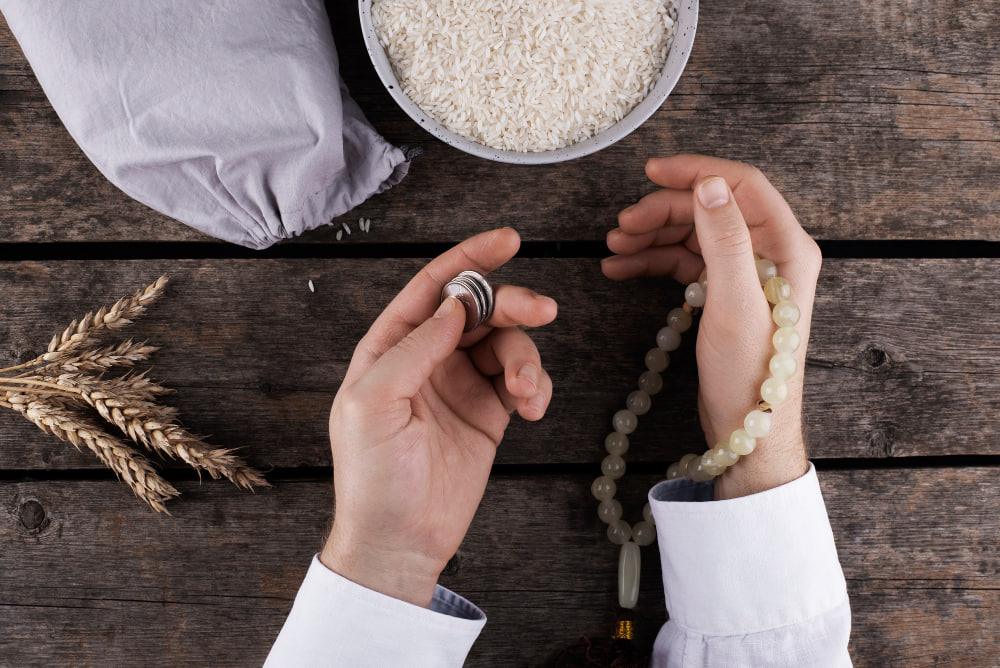
Khums: The Sacred Act of Purifying Wealth and Empowering the Community
In the heart of Islamic social justice lies a profound spiritual and financial obligation known as Khums. Rooted in the Arabic word for “one-fifth,” Khums is more than just a religious tax; it is a pillar of the faith designed to balance society, support the descendants of the Prophet (s), and fund the growth of Islamic knowledge and institutions.
For the followers of the Ahl al-Bayt (a), Khums is an essential act of worship (Ibadah) that purifies one’s lawful earnings and ensures that the blessings bestowed by Allah are shared with the most vulnerable.
The Divine Foundation: Khums in the Holy Qur’an
The obligation of Khums is explicitly mentioned in the Holy Qur’an, where Allah (swt) characterizes its payment as a hallmark of true faith:
“And know that whatever thing you may come by, a fifth of it is for Allah and the Messenger, for the relatives and the orphans, the needy and the traveler, if you believe in Allah and what We sent down to Our servant on the Day of Criterion…” (Surah al-Anfal, 8:41)
Linguistic scholars note that the term “Ghanima” used in this verse refers to any gain or profit acquired, whether through effort, business, or unexpected windfall. By dedicating 20% of our surplus income to Allah’s cause, we acknowledge that He is the ultimate provider of all our sustenance.
The Two Pillars of Khums: Sahm al-Imam and Sahm al-Sadat
Khums is unique in its distribution, divided into two equal parts to address different spiritual and social needs:
1. Sahm al-Imam (The Share of the Imam)
This half belongs to the Imam of our Time, Imam al-Mahdi (aj). During the period of Occultation, this portion is entrusted to the Maraji’ (Grand Jurists). It is utilized for:
- Supporting Islamic seminaries and the education of future scholars.
- Building and maintaining mosques, libraries, and schools.
- The propagation of the message of Islam and the Ahl al-Bayt (a).
- General public interests that strengthen the faith.
2. Sahm al-Sadat (The Share of the Descendants)
This half is dedicated to the impoverished and needy descendants (Sayyids) of the Prophet Muhammad (s). As they are prohibited from receiving Zakat (charity from the general public) to maintain their dignity, Khums serves as the primary means to support the orphans, the poor, and the stranded travelers among them.
The Spiritual Benefits: Why We Pay Khums
Narrations from the Ahl al-Bayt (a) emphasize that Khums is not a burden, but a gateway to spiritual elevation. Some of its recorded benefits include:
- Purification of Wealth: It cleanses your income and ensures that what remains is truly Halal and blessed.
- Fortification of Faith: It builds piety (Taqwa) and strengthens the bond between the believer and their Creator.
- Intercession and Support: It brings the prayers of the Imams (a) and acts as an atonement for sins.
- Social Harmony: It is a key tool for eradicating poverty and fostering a sense of brotherhood within the Ummah.
Practical Rulings: When and How to Calculate
To fulfill this duty, a believer sets a Khumsi Year (a fixed annual date). On this day, one evaluates their surplus wealth after deducting all necessary living expenses for themselves and their family.
What is Subject to Khums?
- Surplus Income: Any savings or unused items (food, materials) remaining at the end of your financial year.
- Business Profits: Earnings from trade, industry, or services.
- Minerals & Treasures: Wealth extracted from the earth (oil, gold, etc.).
- Lawful Wealth Mixed with Unlawful: To purify wealth where the origin of some parts is unknown.
A Note on Modern Taxation
Unlike government taxes, which are mandatory for civil infrastructure and vary by country, Khums is a religious duty spent specifically on spiritual growth and the welfare of the Prophet’s (s) family. Paying government tax does not replace the obligation of Khums, as they serve different purposes and spiritual goals.
How Your Contribution Makes a Difference
By fulfilling your Khums through a trusted Islamic charity or the office of your Marja’, you become a direct participant in:
- Feeding the hungry and sheltering the orphan.
- Educating the next generation of Muslim leaders.
- Spreading the light of the Ahl al-Bayt (a) globally.
“The key to sustenance is the payment of Khums.” – Imam al-Sadiq (a)
Let us honor this tradition and ensure our wealth serves as a witness for us on the Day of Judgment.
Purify Your Wealth Today
Your surplus wealth is a trust from Allah. Holding onto it delays sustenance for the needy and weighs heavily on your spiritual record. By discharging this duty, you empower the next generation of scholars and feed the hungry descendants of the Prophet (s).
Don’t let another year pass with unpurified wealth.
Purify Your Wealth