

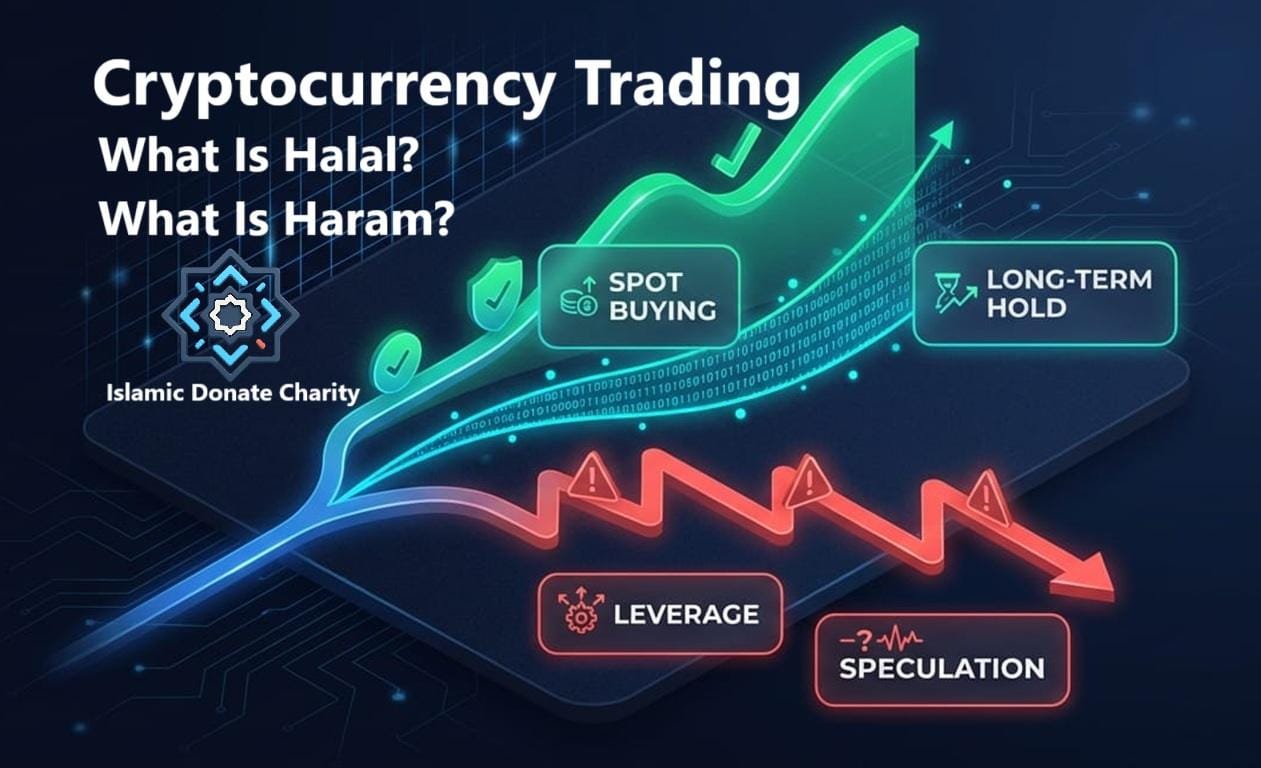
Islamic Rules for Day Cryptocurrency Trading
We know the feeling. The market never sleeps. Fortunes change overnight. You want to participate, yet your faith demands clarity. What is halal? What is haram? We are your team at Islamic Donate Charity. We understand the confusion. Many Muslims face this exact struggle today. The digital finance world feels like a massive puzzle. You want to grow your wealth. You want to provide for your family. You absolutely want to please Allah. This guide will reveal the exact Islamic rules for day cryptocurrency trading. We will walk you through the permitted paths. We will expose the hidden dangers. Read closely. Your financial purity depends on it.
The Foundation of Trade: You Must Own It First
Let us start with a fundamental rule. You must own an asset before you sell it. This is non-negotiable. Selling without possession violates basic Islamic trade principles. Think about a simple real-world example. Can you sell your friend’s watch? No. You do not own it. This exact logic applies to digital assets. You cannot sell a digital coin you have not secured in your wallet. Ownership brings legitimacy. Possession creates the foundation for a valid transaction. This rule protects buyers. It protects sellers. It maintains honesty in the marketplace.
The digital space moves incredibly fast, and the temptation to bypass traditional ownership rules often traps eager investors. Many modern trading platforms offer synthetic assets or paper contracts that merely mimic the price movements of actual coins. They trick users into believing they are trading real value. When you click the buy button on these platforms, you are often just entering a speculative agreement with the broker rather than actually receiving the underlying digital token. You never hold the keys. You never possess the coin. You cannot transfer it to an external wallet. Islam requires tangible or verifiable digital possession to ensure that transactions involve real assets rather than imaginary numbers or debt obligations.
Crypto Trading That Is Haram
You must protect your soul from forbidden wealth. The market offers many tools designed to maximize profit. Many of these tools blatantly violate Sharia law. Beware of these dangerous traps.
- Zero Margin Trading or Leverage: Stay away from borrowed money. Engaging in futures, margin trading, or options involves unacceptable risk. You are trading with funds you do not possess.
- Avoid Short Selling: This practice involves borrowing an asset, selling it, and hoping the price drops. You are selling something you do not own. This directly breaks the first rule of Islamic trade. Read this article if you want to delve deeper into short trading.
- Steer Clear of Riba (Interest): Do not participate in lending programs. Avoid staking pools that yield guaranteed, fixed-percentage returns. Guaranteed profits represent forbidden interest. However, variable profits derived from liquidity pools or genuine investment partnerships remain perfectly permissible because the returns fluctuate based on actual market performance.
- Prevent Maysir (Gambling) & Gharar (Excessive Uncertainty): Day trading for profit is generally allowed. Speculative betting is absolutely forbidden. That is, you cannot invest on the possibility of price increases or decreases.
What Should I Do With the Profits from Haram?
Mistakes happen. Perhaps you did not know the Islamic laws. You accidentally made haram profits. Now you feel immense guilt. You desperately want to correct this error. Do not panic. You cannot spend this tainted money. You cannot convert these illicit profits into other personal assets. You must completely remove this haram wealth from your life.
What is the solution? Give it away. You must distribute this money to the needy. You cannot do this publicly. You cannot do this yourself because the source of the funds and the final destination must remain completely anonymous. You should not claim any spiritual reward for this specific act. It is a purification process. This means that you cannot pay this money as Zakat because obligatory religious payments must be made from your lawful wealth. So you must give this unlawful wealth as charity (Sadaqah) to a stranger and an unknown person, i.e. from an unknown person (you) to an unknown person (the needy person). We strongly suggest using a secure cryptocurrency donate method to achieve this anonymity. Transferring these funds to a trusted charity ensures the money helps those in distress without tracing back to your identity. Cleanse your portfolio. Protect your peace of mind.
Crypto Trading That Is Halal
You can absolutely trade digital currencies in a Sharia-compliant way. Wealth creation is a blessing when pursued correctly. Our religious scholars endorse specific methods.
- Spot Trading: Buy actual coins. Hold them in your wallet. Sell them when the price increases. This is simple, direct, and completely halal.
- Swing Trading: Many Muslims contact us with incredible technical analysis skills. They identify market waves. They spot the bottoms. They recognize the tops. Buy at the bottom. Sell at the top. This mirrors traditional commerce. You buy gold when the price drops. You sell gold when demand surges. You can do the same transactions in Bitcoin. Muslims have engaged in supply and demand commerce for centuries. You apply this ancient wisdom to a modern digital landscape.
What to Do With Halal Profits: Multiplying Blessings
You analyzed the market. You executed a flawless spot trade. You earned pure, halal profit. Congratulations! Now you face a beautiful obligation. Zakat is due on your accumulated wealth.
Purify your success. Some successful traders pay zakat on their gains every single time they close a profitable trade. They immediately distribute 2.5% of their profits. This beautiful habit ensures their assets remain spiritually clean all year round. We at Islamic Donate Charity witness this generosity daily. These traders bring immense goodness into their own lives. They simultaneously rescue the vulnerable. They feed orphans. They shelter refugees.
Giving Zakat in Trading
Your halal profit carries the power to change the world. Give generously. Watch your blessings multiply.