
Explore the Quranic meaning of Ummah Wahidah, why Taqwa defines human worth, and how Islamic brotherhood and Ihsan obligate mutual aid across borders.
What does Ummah Wahidah mean in the Quran and Sunnah?
The Arabic phrase Ummah Wahidah translates literally to “one unified community” or “a single nation bound by a shared moral purpose.” Linguistically, the root A-M-M connects to Umm (mother Arabic: أُمّ), Imam (leader or model), and Amm (destination or deliberate aim). In Quranic theology, an Ummah represents a collective body of believers united by the worship of One God (Tawhid), transcending bloodlines, skin color, language, citizenship, and socioeconomic class.
Allah addresses humanity directly regarding this shared spiritual identity in Surah Al-Anbiya (21:92):
“O prophets! Indeed, this religion of yours is only one, and I am your Lord, so worship Me alone.”
In other words, the Arabic phrase explicitly and precisely uses the term “أُمَّةً وَٰحِدَةً” (ummah wāḥidah), meaning a “One Nation.” The same principle reappears in Surah Al-Mu’minun (23:52), reinforcing that every prophet from Adam through Muhammad (peace be upon them all) called people toward one cohesive moral community. Furthermore, in Surah Ali ‘Imran (3:103), believers are commanded to hold firmly together to the rope of Allah and remain undivided.
Translating this theological unity into physical relief is the daily mandate of our work at Islamic Donate. When communities face famine, water scarcity, or displacement, theoretical solidarity holds little weight unless believers act. You can turn communal solidarity into immediate impact when you contribute to our global emergency humanitarian relief fund or sponsor clean water (water well) borehole projects in rural. Because our organization operates under a verified 100 percent donation policy where volunteers cover every administrative, office, and advertising cost out of pocket, every satoshi or asset sent through our non-custodial cryptocurrency donation gateway procures direct supplies for families in crisis.
The Prophet Muhammad (peace be upon him) anchored this unity in two physical metaphors that appear in the highest authenticated Hadith collections:
- The metaphor of a single living organism (Al-Jasad al-Wahid): An-Nu’man ibn Bashir narrated in Sahih al-Bukhari (6011) and Sahih Muslim (2586) that the Prophet described the believers in their mutual affection, mercy, and compassion as a single body. When one limb suffers an injury or infection, the entire body responds with sleeplessness and fever. Pain experienced in Gaza, Sudan, rural Afghanistan, or flood-stricken Nepal must trigger an immediate physiological and financial response from believers living in comfort elsewhere.
- The metaphor of an interlocking masonry structure (Al-Bunyan al-Marsus): Abu Musa al-Ash’ari reported in Sahih al-Bukhari (481) and Sahih Muslim (2585) that the believer to another believer is like a brick wall whose individual stones lock together to reinforce one another. To demonstrate this physically, the Prophet interlaced the fingers of both hands. A wall collapses if load-bearing bricks detach themselves; a community weakens whenever wealthier regions ignore the structural collapse of impoverished regions.
In other words, you or me, as a faithful Muslim living in a country like England, Spain, or France, in comfort and peace, far removed from war and displacement, ought to heed the words of the Prophet by supporting the Muslim community in crisis-stricken nations such as Palestine, Sudan, and Syria. We should strive to assist in any way we can, including by raising awareness and disseminating information to fellow Muslims.
Why is Taqwa the only measure of superiority in Islam?
Pre-Islamic societies, like many modern geopolitical systems, ranked human value through tribal lineage (Nasab), ethnicity, accumulated wealth, or national dominance. Islam abolished every artificial hierarchy in a single verse revealed in Surah Al-Hujurat (49:13):
“O mankind, indeed We have created you from male and female and made you peoples and tribes so that you may know one another. Indeed, the most noble of you in the sight of Allah is the most righteous of you (Atqakum). Indeed, Allah is Knowing and Aware.”
This verse establishes two parallel truths. First, ethnic, linguistic, and cultural diversity is intentional divine design meant for mutual recognition (Ta’aruf), cooperation, and cultural enrichment. Second, divine evaluation ignores genetic ancestry and net worth completely, focusing solely on Taqwa (God-consciousness, moral restraint, and active obedience to Allah).
During the Farewell Pilgrimage (Hajjat al-Wada’) in the tenth year after Hijrah, standing before over one hundred thousand Companions on the plains of Arafat, the Prophet (peace be upon him) codified universal human equality in a timeless charter recorded in Musnad Ahmad (23489):
“O people, your Lord is One, and your father Adam is one. There is no superiority of an Arab over a non-Arab, nor of a non-Arab over an Arab, nor of a white person over a black person, nor of a black person over a white person, except through Taqwa.”
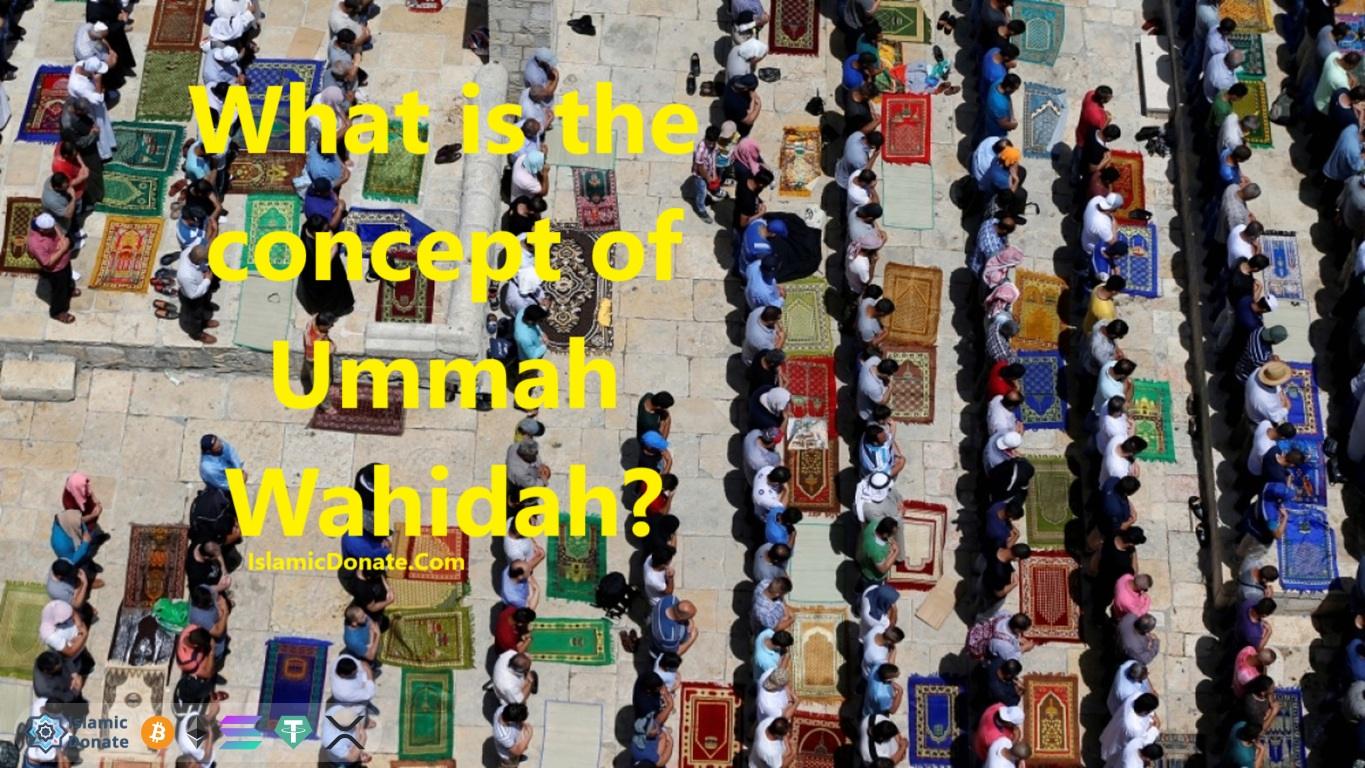
Abu Hurayrah reinforced this criterion in Sahih Muslim (2564), narrating that Allah does not look at physical appearances or material possessions; He looks strictly at the sincerity of the heart and the quality of righteous deeds. In practical congregational life, this equality manifests five times daily when billionaires, refugees, scholars, and day laborers stand foot-to-foot in straight prayer rows, and annually during Hajj when millions wear identical unstitched white garments (Ihram). To put Taqwa into tangible action during sacred seasons, explore our guide to maximizing Ramadan food distribution and daily worship.
“…And be as fellow-brothers and servants of Allah. A Muslim is the brother of a Muslim. He neither oppresses him nor humiliates him nor looks down upon him. The piety is here, (and while saying so) he pointed towards his chest thrice. It is a serious evil for a Muslim that he should look down upon his brother Muslim. All things of a Muslim are inviolable for his brother in faith: his blood, his wealth and his honour.” (Sahih Muslim 2564)
| Metric of Evaluation | Pre-Islamic Tribalism (Asabiyyah) | Islamic Standard (Ummah Wahidah) |
| Basis of Identity | Bloodline, clan, race, or passport | Shared faith in Allah and universal human dignity |
| Measure of Nobility | Wealth, political power, and ancestry | Taqwa (God-consciousness and righteous character) |
| Scope of Loyalty | Blind defense of one’s tribe, right or wrong | Standing for justice (Qist) even against oneself |
| Treatment of Outsiders | Exploitation or indifference | Benevolence (Ihsan), fair dealing, and protection of life |
Table explanation: Contrast between divisive tribalism (Asabiyyah) and the Quranic framework of Ummah Wahidah built upon universal equality and Taqwa.
How does Islam define humanity, brotherhood, and Ihsan?
Within the architecture of Ummah Wahidah, human relationships operate across three concentric circles of ethical responsibility: universal humanity (Insaniyyah), faith-based brotherhood (Ukhuwwah), and spiritual excellence (Ihsan).
Universal Humanity and Dignity (Karamah Insaniyyah)
Surah Al-Isra (17:70) affirms that Allah has honored every child of Adam equally, regardless of creed. Saving a single human life is equated in Surah Al-Ma’idah (5:32) to saving all of humanity. In Islamic humanitarian operations, emergency relief such as clean drinking water, trauma surgery, and disaster food parcels extends across all suffering communities without discrimination, reflecting the universal mercy (Rahmah) of the Prophetic mission. This matter is of such importance to the Islamic Donate team that we have formalized it as the “Ihsan al-A’mal” (Benevolence in Deeds) policy, ensuring that these Quranic teachings continue to guide us.
Faith-Based Brotherhood (Al-Ukhuwwah al-Imaniyyah)
Surah Al-Hujurat (49:10) declares succinctly:
“The believers are truly brothers, so make settlement between your brothers and fear Allah that you may receive mercy.”
When the Makkans migrated empty-handed to Madinah during the Hijrah, the Prophet institutionalized brotherhood through Al-Mu’akhat (the Pact of Brotherhood), pairing each displaced migrant (Muhajir) with a local Madinan host (Ansari). The Ansar offered half of their date orchards, homes, and commercial capital to lift their brothers out of poverty. Rather than creating permanent dependency, the Muhajirun requested directions to the marketplace to rebuild economic self-sufficiency. This historical blueprint guides sustainable humanitarian design today, balancing acute survival aid with livelihood training and water infrastructure.
Benevolence and Excellence (Ihsan)
In the famous Hadith of Jibril (Sahih Muslim 8), the Prophet defined Ihsan in worship as worshipping Allah as though you see Him, knowing that even though you do not see Him, He sees you. In social ethics, Surah An-Nahl (16:90) pairs Al-‘Adl (strict justice) directly with Al-Ihsan (generous excellence) (Arabic: إِنَّ ٱللَّهَ يَأْمُرُ بِٱلْعَدْلِ وَٱلْإِحْسَـٰنِ). Justice demands giving people exactly what they are legally owed; Ihsan motivates giving beyond strict minimums with dignity, warmth, and perfection. Shaddad ibn Aws narrated in Sahih Muslim (1955) that Allah has prescribed Ihsan upon every single action (Arabic: إِنَّ اللَّهَ كَتَبَ الإِحْسَانَ عَلَى كُلِّ شَىْءٍ ). In charity work, Ihsan demands refusing to send expired food, broken equipment, or poorly constructed wells. It obligates sourcing high-grade staples, repairing boreholes to durable engineering specs, and protecting recipient dignity during distribution.
At Islamic Donate, charitable activities and relief projects for those in need have been passed down through generations; this legacy of benevolence is an integral part of our story and our charitable mission. We place such high importance on providing aid with dignity that our volunteers exercise meticulous care when executing projects or distributing food, canned goods, and raw provisions. Before any distribution takes place, our volunteers carefully inspect the packages to ensure that those in need receive wholesome food, clean water, clean clothing, and personal hygiene supplies.
What are the practical duties of Muslims toward one another in times of crisis?
Brotherhood in Islamic jurisprudence (Fiqh) carries enforceable moral and communal rights. Classical jurists extracted clear obligations from the prophetic traditions governing how believers must respond when another segment of the Ummah suffers poverty, famine, natural disaster, or conflict:
- Relieving acute worldly distress (Tafrij al-Kurubat): Abu Hurayrah narrated in Sahih Muslim (2699) that whoever relieves a believer of a severe hardship in this world, Allah will relieve them of a severe hardship on the Day of Resurrection. Whoever eases the burden of someone in financial difficulty, Allah will grant them ease in both worlds.
- Eliminating hunger within one’s reach: Ibn Abbas narrated in Al-Adab Al-Mufrad (112, graded Sahih) that the Prophet warned: “He is not a complete believer who eats his fill while his neighbor beside him goes hungry.” Classical jurists including Imam Ibn Hazm in Al-Muhalla ruled that if a person dies of starvation in a locality where wealthy Muslims possessed surplus funds and withheld them, the affluent residents bear collective moral liability. In an interconnected digital world and digital wallet, where global news reaches our phones instantaneously, geographical distance no longer excuses willful blindness!
- Cooperating in righteousness and piety: Surah Al-Ma’idah (5:2) commands believers to cooperate in Al-Birr (active goodness and social welfare) and Al-Taqwa (Arabic: وَتَعَاوَنُوا۟ عَلَى ٱلْبِرِّ وَٱلتَّقْوَىٰ), while refusing cooperation in sin and aggression.
- Protecting the vulnerable and upholding honor: In Sahih Muslim (2564), the Prophet established that a Muslim does not oppress his brother, does not abandon him to harm (La yakhdhuluhu), and does not belittle him. Abandonment (Khidhlan) occurs when one possesses the wealth, voice, or technical skill to rescue a distressed community and chooses apathy instead.
- Sustained sincere supplication (Dua in absence): According to Sahih Muslim (2732), whenever a Muslim supplicates for an absent brother or sister, an angel appointed beside them responds, “Amin, and may you receive the exact same.”
“There is no believing servant who supplicates for his brother behind his back (in his absence) that the Angels do not say: The same be for you too.” (Sahih Muslim 2732)
How can modern believers revive communal solidarity across borders?
Fragmentation across modern nation-states, currency controls, and ideological rivalries has weakened the practical reflexes of Ummah Wahidah. Reviving authentic solidarity requires combining spiritual discipline with disciplined institutional infrastructure:
- Replace reactive emotion with systematic giving: Social media outrage fades within seventy-two hours, whereas displaced families need clean water, winter shelter, and flour twelve months a year. Setting up scheduled monthly transfers ensures field partners can sign long-term local supplier contracts rather than waiting for viral crises.
- Demand radical financial transparency: Donor fatigue grows when opaque charities consume 25 to 40 percent of contributions in executive salaries and fundraising overhead. Support institutions that publish clean audit documentation, partner directly with vetted local grassroots trustees, and maintain a strict 100 percent donation policy.
- Prioritize local procurement and economic self-sufficiency: Shipping packaged goods from Western warehouses incurs massive freight costs and undercuts local farmers. Funding local trustees to purchase grain, meat, blankets, and medical supplies directly inside affected regions injects liquidity into battered local economies while stretching every donated dollar much further.
- Build borderless financial literacy: Traditional banking corridors frequently freeze, delay, or heavily tax humanitarian remittances to developing nations and crisis zones. Embracing transparent, Sharia-compliant digital payment rails empowers individual believers to support distant brothers and sisters quickly and reliably.
Frequently Asked Questions
1- Why is Taqwa the only measure of superiority in Islam?
Islam eliminates artificial hierarchies based on lineage, race, or wealth. Surah Al-Hujurat and the Prophet's Farewell Sermon establish that divine honor depends exclusively on Taqwa, or God-consciousness. Physical traits and ancestry are divinely designed for mutual recognition, whereas Allah measures human value strictly through sincere faith, moral restraint, and righteous conduct.
2- What are the practical duties of Muslims toward one another in times of crisis?
Islamic jurisprudence mandates relieving worldly hardship, eliminating localized hunger, and cooperating in righteous social welfare. Believers are strictly forbidden from abandoning distressed brothers and sisters when possessing the means to assist. Furthermore, communal responsibility includes protecting vulnerable populations from harm, avoiding humiliation, and maintaining consistent, sincere supplication for absent believers facing severe adversity.
3- How can modern believers revive communal solidarity across borders?
Modern believers can revive solidarity by replacing emotional, sporadic charity with structured recurring donations. They should demand transparent operations with zero overhead deductions, prioritize local procurement to stimulate recipient economies, and adopt reliable digital payment channels. These coordinated practices bypass slow banking corridors and turn theoretical unity into practical, sustainable humanitarian relief.