

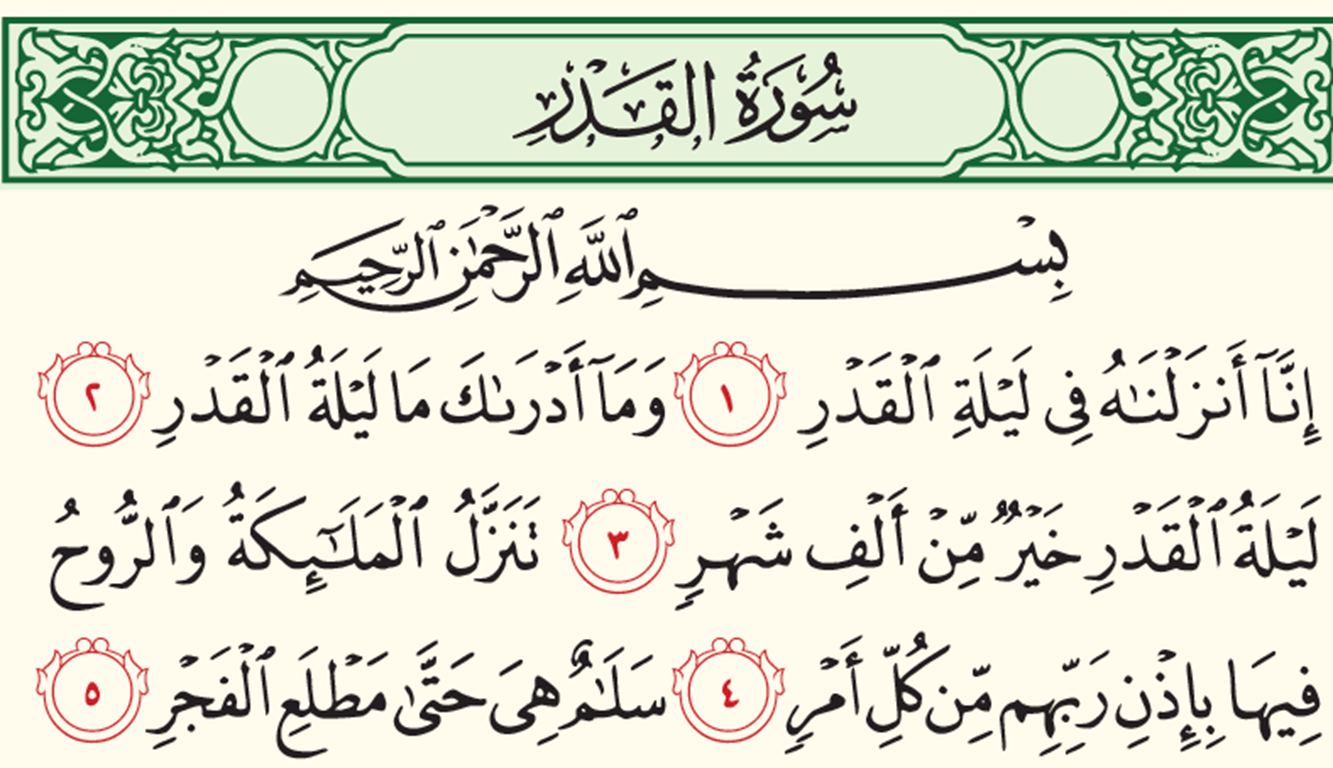
The Night of Destiny (Laylat al-Qadr)
Qadr is an Arabic word meaning measure and destiny. The Night of Destiny (Laylat al-Qadr) marks the revelation of the Quran and the determination of human affairs for the coming year. It is the most superior night of the year in Islamic tradition, characterized by Allah’s mercy and forgiveness. During this night, angels descend to earth.
The exact date of Laylat al-Qadr is concealed. However, according to the traditions of the Prophet Muhammad (peace be upon him), Muslims are instructed to seek it during the odd-numbered nights of the last ten days of the month of Ramadan. Muslims stay awake during these nights to recite the Quran, offer supplications, and perform extra acts of worship. Based on different beliefs, Muslims emphasize different numbers, but all of this is not certain, and what is certain is that Allah did not declare it clearly, with beauty and tenderness, in the night.
Position and Importance of Qadr
Laylat al-Qadr holds the highest rank in Islamic culture. An entire chapter of the Quran, Surat al-Qadr, is dedicated to describing its significance. In this chapter, Allah states that the Night of Destiny is better than a thousand months. This signifies that good deeds, prayers, and charity performed on this single night hold more value than those performed over a thousand months that do not contain the Night of Qadr. The opening verses of Surat al-Dukhan also emphasize its importance, describing it as a blessed night.
The Revelation of the Quran
The Quran explicitly states in Surat al-Qadr and Surat al-Dukhan that the holy book was revealed on the Night of Destiny. This night marks the initial descent of the Quranic message from Allah to the Prophet Muhammad (peace be upon him), serving as a pivotal moment in human history and the foundation of the Islamic faith.
The Determination of Affairs
The Quran states in Surat al-Dukhan that on this blessed night, every matter of wisdom is ordained. Islamic tradition holds that Allah determines the destiny, life spans, and sustenance of all human beings for the coming year during Laylat al-Qadr. Because this night heavily influences human fate, believers dedicate themselves to supplications, worship, and good deeds to seek Allah’s favor and a positive destiny.
The Descent of Angels
Surat al-Qadr describes the physical and spiritual events of the night. The Quran states that the angels and the Spirit descend on this night by the permission of their Lord with every decree. Their presence brings peace and blessings to the earth from sunset until the emergence of dawn.
Forgiveness of Sins in Qadr
The Night of Destiny is a time of immense mercy and forgiveness. The doors of heaven are open for believers. The Prophet Muhammad (peace be upon him) established the primary reward for observing this night by stating that whoever establishes prayers on the Night of Qadr out of sincere faith and hoping for a reward from Allah will have all their past sins forgiven.
Acts of Worship and Rituals
Muslims worldwide spend extended time in mosques and at home during the last ten nights of Ramadan. They remain awake until dawn, engaging in recommended acts of worship. Key practices include:
- Reciting and reflecting upon the Quran.
- Performing voluntary prayers throughout the night.
- Making sincere supplications and asking Allah for forgiveness.
- Praying for the well-being of family, the community, and humanity.
Community practices on these nights also include providing meals for breaking the fast (Iftar) and the pre-dawn meal (Suhoor), fulfilling vows, feeding those in need, and giving charity (Zakat).
Feeding the Needy