Food and Nutrition

Aspects of Muslim Food Culture: A Comprehensive Guide with Hadiths and Verses

Eating Etiquette in Islam

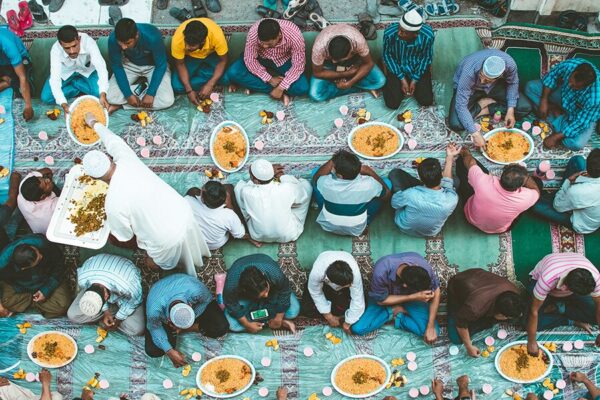
Islamic teachings place great emphasis on cleanliness, gratitude, and respect for food. On the other hand, Islam places great emphasis on the importance of food, its consumption, and its role in community building. These values are reflected in the detailed guidelines for eating behavior. Let’s explore how to seamlessly integrate these into your daily life while adhering to Islamic principles.

Food, Faith and Financial Wisdom

Before Eating:

  • Wash hands: The Prophet Muhammad (peace be upon him) said, “When any one of you wakes up from sleep, let him wash his hands three times before inserting them in the vessel, for indeed one of you does not know where his hand has been during his sleep.” (Sahih Muslim)
  • Invoke Allah’s name: “When any one of you eats, let him mention the name of Allah, and if he forgets to mention it in the beginning, let him say: ‘Bismillah fi awwalihi wa akhirihi’ (In the name of Allah at its beginning and its end).” (Sahih Bukhari)
  • Mindful Consumption: Eat slowly, savor your food, and avoid overeating. The Prophet advised, “The stomach is the vessel of the body, so feed it only what is sufficient for it.” (Hadith)
  • Sit properly: While there’s no specific verse, the general Islamic ethos of cleanliness and respect for food implies sitting properly during meals.

During Eating:

  • Eat with the right hand: The Prophet Muhammad (peace be upon him) said, “The Satan eats with his left hand.” (Sahih Bukhari)
  • Eat moderately: The Prophet Muhammad (peace be upon him) said, “The stomach is the vessel of the body, so feed it only what is sufficient for it. Verily, the believer’s stomach is the worst vessel to be filled.” (Hadith)
  • Show gratitude: “Eat what Allah has provided for you, lawful and good. And be grateful for the favor of Allah, if it is He whom you worship.” (Quran, 16:114)
  • Avoid talking excessively: While there’s no specific prohibition, the focus on enjoying the food and showing gratitude implicitly discourages excessive talking.
  • Share food: The Prophet Muhammad (peace be upon him) emphasized the importance of sharing, saying, “The best food is that which is eaten by two or three, and the blessing in a pot is for three people.” (Hadith)

After Eating:

  • Praise Allah: “And when you have finished, get up to pray.” (Quran, 20:14)
  • Clean up: Helping with cleanup is a manifestation of cooperation and respect for others.
  • Wash hands again: This reinforces the importance of hygiene and cleanliness.

Recommended Foods in Islam

Islam provides broad guidelines for permissible (halal) and prohibited (haram) foods, emphasizing purity and health.

Halal and Haram

Islamic dietary laws are clear about permissible (halal) and prohibited (haram) foods. Adhering to these guidelines is crucial for a righteous lifestyle.

Halal Foods:

  • Meat: From animals slaughtered according to Islamic rites (dhabiha). Allah says, “O you who believe, eat from the good things We have provided for you and be grateful to Allah if it is He you worship.” (Quran, 2:172)
  • Poultry: Similarly slaughtered.
  • Fish and seafood: Generally permissible, except for those without scales and fins.
  • Dairy products: Milk, cheese, yogurt, etc., are generally permissible.
  • Fruits and vegetables: All are allowed unless contaminated with haram substances.
  • Grains and legumes: Staple foods in Islamic diets.

Haram Foods:

  • Pork and its by-products: “Prohibited to you are dead animals, blood, the flesh of swine, and that which has been dedicated to other than Allah , and [those animals] killed by strangling or by a violent blow or by a head-long fall or by the goring of horns, and those from which a wild animal has eaten, except what you [are able to] slaughter [before its death], and those which are sacrificed on stone altars, and [prohibited is] that you seek decision through divining arrows. That is grave disobedience. This day those who disbelieve have despaired of [defeating] your religion; so fear them not, but fear Me. This day I have perfected for you your religion and completed My favor upon you and have approved for you Islam as religion. But whoever is forced by severe hunger with no inclination to sin – then indeed, Allah is Forgiving and Merciful.” (Quran, 5:3)
  • Blood and blood products: Prohibited.
  • Carrion: Dead animals not slaughtered according to Islamic law.
  • Animals strangled, beaten to death, killed by a fall, or killed by a wild animal: Not permissible.
  • Alcohol and intoxicants: Strictly prohibited.

Beyond the basics:

  • Moderation: “O children of Adam, wear your adornment at every place of prayer and eat and drink, but be not excessive. Indeed, He likes not those who are excessive.” (Quran, 7:31)
  • Health: The Prophet Muhammad (peace be upon him) emphasized the importance of a healthy lifestyle, including diet.
  • Sharing: “The best food is that which is eaten by two or three.” (Hadith)

Islam: Nourishment for Body and Soul

Islam places immense importance on both physical and spiritual well-being. This is reflected in its comprehensive guidelines for food consumption and its strong emphasis on compassion and charity.

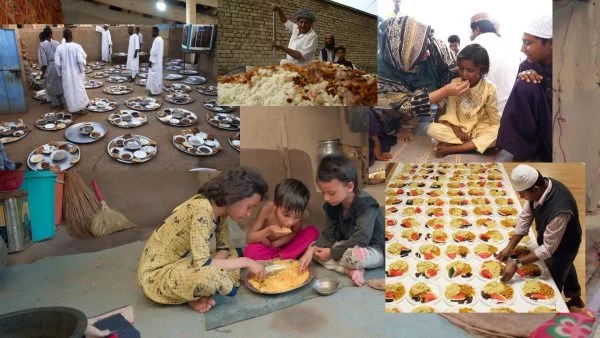
While the Quran and Sunnah offer detailed instructions on dietary laws, food etiquette, and gratitude for sustenance, they also profoundly underscore the significance of sharing one’s blessings. Islam recognizes that access to food is a fundamental human right and that it is incumbent upon those who are fortunate to assist those in need.

The act of feeding the hungry, whether through direct provision or financial support, is considered a noble deed with immense rewards in the Hereafter. You can also contribute to the Giving Food Donation. By caring for the less fortunate, Muslims embody the spirit of compassion and unity that lies at the heart of their faith.

By adhering to these guidelines, Muslims strive to nourish both their bodies and souls in accordance with Islamic teachings.

Would you like to delve deeper into a specific aspect of Muslim food culture, such as the concept of halal food certification? You can read this article about the Halal process at our Islamic charity here.

Food and NutritionIbadah / Acts of WorshipReligion

How Cryptocurrency Can Aid Humanitarian Efforts in Gaza

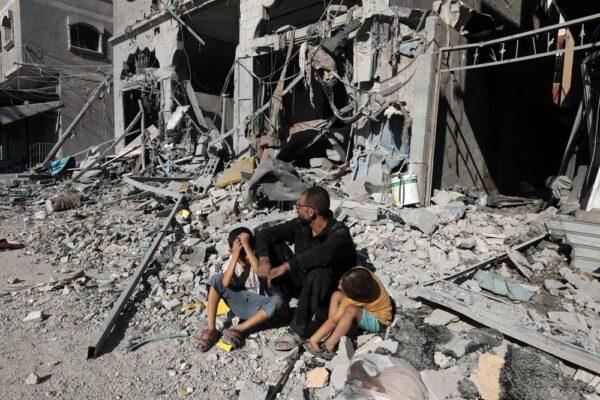
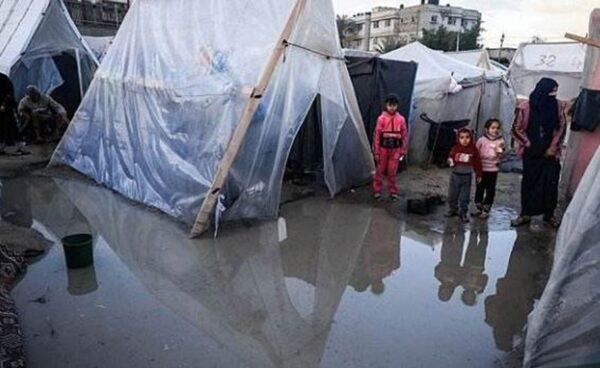
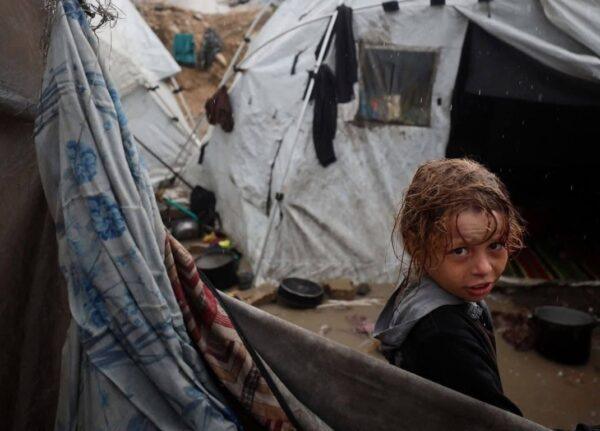
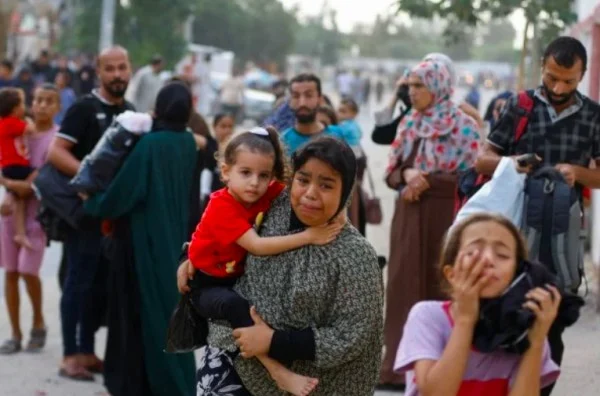
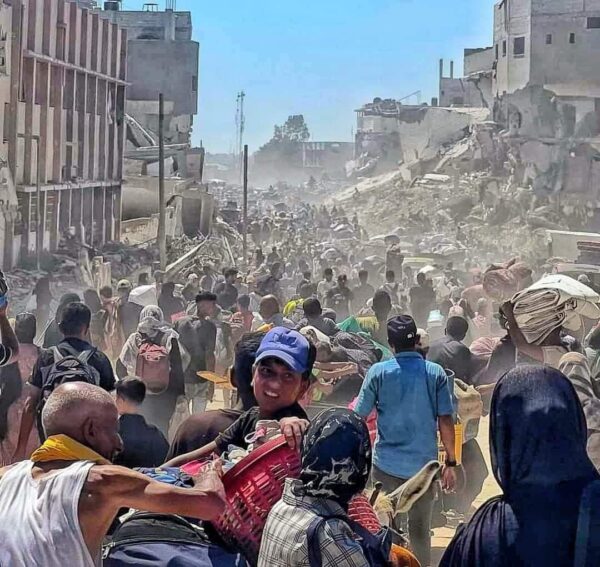
In the wake of the recent devastation on August 9 and 10, 2024 in Khan Younis, Gaza, our Islamic charity is stepping up to provide essential aid to over 70,000 displaced individuals. These people are in dire need of basic necessities such as water, food, and shelter. As we navigate these challenging times, we are exploring innovative ways to support our humanitarian efforts, including the use of cryptocurrency for donations. We had seen these damages in this area in July 2024, and for that we also presented a report on the events of Gaza and Khan Younis, which you can read here.

The Urgency of the Situation

The recent events on August 9 and 10, 2024, have left a significant portion of the Gaza region in ruins. Families have been uprooted, homes destroyed, and the basic infrastructure needed for daily life severely compromised. The immediate need is to provide safe water and food, including dry and canned goods, to those affected. Our priority is to guide these displaced individuals to safer areas, particularly towards the southern parts of the region and the western border with Egypt, where we can offer more comprehensive support, including clothing, shelter, and healthcare.

Why Cryptocurrency?

Cryptocurrency offers a unique and efficient way to support our humanitarian efforts. By using crypto donations, we can ensure that funds are transferred quickly and securely, without the delays and fees associated with traditional banking systems. This is particularly crucial in emergency situations where time is of the essence. Additionally, crypto donations can be made anonymously, allowing silent donors to contribute without revealing their identities, which can be important for those who prefer to keep their charitable giving private.

How You Can Help

We invite you to join us in our mission to provide humanitarian aid to the people of Gaza. By donating cryptocurrency, you can help us deliver essential resources to those in need. Your contributions will go directly towards providing safe water, food, and shelter to the displaced families in Khan Younis. Together, we can make a significant impact and bring hope to those who are suffering.

A Lifeline for Displaced Families in Gaza

In these trying times, it is more important than ever to come together and support those in need. Our Islamic charity is committed to providing the necessary aid to the people of Gaza, and with your help, we can make a difference. Whether you choose to donate anonymously or openly, your support is invaluable. Let us work together to bring relief and hope to the people of Khan Younis.

Food and NutritionHumanitarian AidReportWhat We Do

Help Yemen: Addressing the Crisis in Hodeidah

In the wake of the recent devastation in the Hodeidah region of Yemen, which began on July 20, 2024, the situation has become dire. As members of our Islamic charity, we are committed to providing immediate and effective aid to those in need. This article aims to shed light on the current crisis and how we can collectively make a difference.

The Crisis Unfolded

The Hodeidah region has been severely impacted by a series of unfortunate events. A massive fire engulfed the main fuel tank at the port, leading to significant transportation issues. This has left the local population struggling to move around, exacerbating their daily challenges. Additionally, the harbor cranes have been rendered inoperative, causing a drastic reduction in the availability of essential food supplies. The situation is further compounded by the injuries sustained by many residents, with several hundred suffering from burns. You can read more about the events here.

Immediate Needs

The people of Hodeidah are in urgent need of basic necessities. The disruption in transportation and the malfunctioning harbor cranes have led to a scarcity of food. Our priority is to ensure that these basic needs are met. We are also focusing on providing medical supplies, particularly burn medicines and ointments, to treat those who have been injured.

How You Can Help

As a community, we have the power to make a significant impact. By donating to our cause, you can help us provide the necessary aid to the people of Hodeidah. Cryptocurrency donations are a modern and efficient way to contribute, ensuring that your support reaches those in need quickly and securely. Whether you choose to donate anonymously or openly, your contribution will make a difference.

Join Us in Making a Difference

Our Islamic charity is dedicated to helping those in need, and we operate with a 100% donation policy to ensure that every contribution goes directly to those who require it most. By coming together, we can provide humanitarian aid and support to the people of Hodeidah during this challenging time. Let us stand united in our efforts to bring relief and hope to those affected by this crisis.

Together, we can make a difference. Donate today and help us bring much-needed aid to the people of Hodeidah. Your generosity and support are invaluable in these trying times.

Food and NutritionHealthcareHumanitarian AidIbadah / Acts of WorshipReportWhat We Do

Can Crypto Zakat Help Palestine?

Absolutely. Here’s Why.

As Muslims, fulfilling our Zakat obligation is a sacred duty. It’s a pillar of Islam, a way to purify our wealth and ensure it reaches those who need it most. But what about in times of crisis, when traditional methods of giving might seem limited? Can Zakat be used to help those suffering in Palestine, for example?

The answer is a resounding yes. The Quran itself outlines eight categories of recipients for Zakat, and Palestinians facing hardship fall squarely within several of these categories. Let’s explore why:

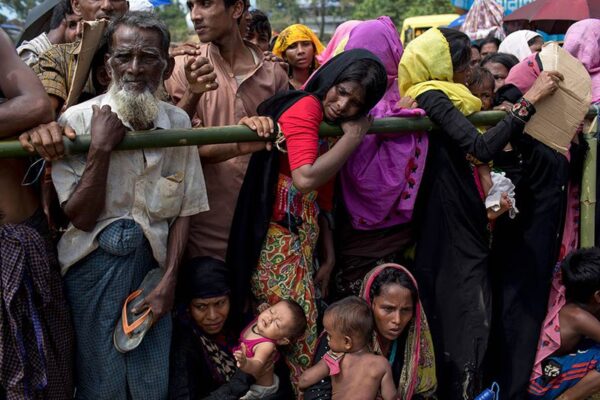
  • The Needy and Poor: The very foundation of Zakat is to support those in need. The ongoing conflict in Palestine has displaced countless families, leaving them vulnerable and destitute. Your Zakat can provide them with vital resources like food, shelter, and medical care.
  • Travelers (Ibn As-Saabil): This category can be interpreted to include those who are displaced from their homes due to war or conflict. Palestinians living in refugee camps or those who have fled their homes in Gaza can be considered Ibn As-Saabil, making them eligible Zakat recipients.

The urgency of the situation in Palestine demands immediate action. This is where the power of cryptocurrency comes in. Donating Zakat through crypto offers several advantages:

  • Faster and More Efficient: Crypto transactions are swift and borderless. Your Zakat can reach Palestinians in Gaza or Rafah quickly and directly, bypassing potential delays or restrictions associated with traditional methods.
  • Transparency and Security: Blockchain technology ensures transparency in how your Zakat is used. You can be confident that your donation reaches its intended recipients.
  • Anonymity: If you wish to remain anonymous, crypto donations allow for discreet giving.

Remember, crypto Zakat is no different from traditional Zakat in its core purpose. It’s simply a more efficient way to fulfill your obligation in today’s digital world.

Fulfilling this obligation directly reflects the message of the Quran. Allah (SWT) says in Surah Al-Baqarah verse 273:

“[Charity is] for the poor who have been restricted for the cause of Allah , unable to move about in the land. An ignorant [person] would think them self-sufficient because of their restraint, but you will know them by their [characteristic] sign. They do not ask people persistently [or at all]. And whatever you spend of good – indeed, Allah is Knowing of it.”

This verse emphasizes the importance of Zakat alongside prayer, highlighting its role in purifying our wealth and supporting those in need.

In line with the Quranic verse, a significant portion of Zakat donations entrusted to our Islamic charity goes towards providing food aid and water aid. This has been our focus for many years, including during the conflicts in Yemen and the ISIS crisis in Syria. We prioritize alleviating the suffering of the most vulnerable, ensuring your Zakat reaches those who need it most.

By donating your Zakat through a reputable Islamic charity that accepts crypto donations, you can directly contribute to alleviating the suffering of Palestinians. Our Islamic charity, for example, has a proven track record of delivering humanitarian aid to those in need. Read the report where we described our needs and actions in Palestine.

We operate with a strict 100% donation policy, ensuring every satoshi you donate goes directly to supporting Palestinians.

How can you pay crypto zakat?

You can use the following links:

Let us join hands and answer the call for help from our brothers and sisters in Palestine. Together, through the power of Zakat and innovative tools like cryptocurrency, we can make a real difference in their lives.

Food and NutritionHumanitarian AidIbadah / Acts of WorshipWhat We DoZakat

The Gift of Clean Water in Islam and Beyond

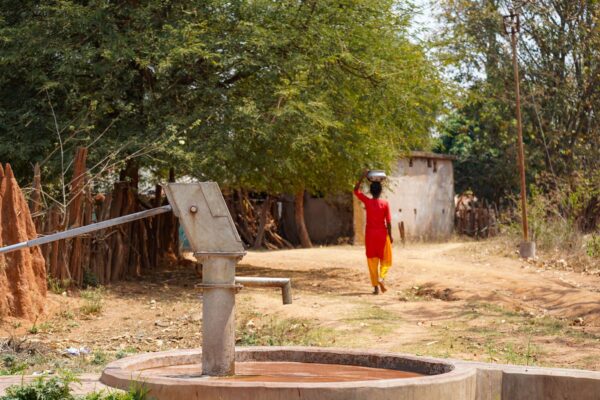
Imagine a world where the simplest act of quenching your thirst becomes a daily struggle. This harsh reality faces millions globally, lacking access to clean drinking water, a fundamental necessity for life itself. In Islam, water holds immense significance, woven into the very fabric of our faith and practices.

The Quran beautifully describes water’s role in creation:

“And We have made from water every living thing. Will they not then believe?” (Quran 21:30).

It’s a source of purification, used for ablution (ritual cleansing) before prayers. Prophetic traditions emphasize its importance, with Prophet Muhammad (ﷺ) narrating:

“The best form of charity is giving water.” (Sunan Ibn Majah 4286).

This significance extends beyond religious practice. Clean water is the cornerstone of health and well-being. Medical science highlights its vital role in regulating body temperature, flushing toxins, and ensuring proper organ function. Dehydration can lead to a cascade of health complications, impacting everything from digestion to cognitive function.

Water is also the lifeblood of agriculture. It nourishes crops, sustains livestock, and underpins food security for entire communities. When access to clean water is limited, agricultural productivity suffers, impacting food availability and potentially leading to malnutrition.

Our faith actively encourages providing clean water to those in need. Prophet Muhammad (ﷺ) emphasized:

“Whoever provides water to a believer who is thirsty will be rewarded according to what he has provided.” (Sahih al-Bukhari 6041).

This extends not just to fellow Muslims but to all living beings.

Among Sadaqah Jariyah (ongoing charity), providing clean water through wells or water filtration systems is a powerful and impactful choice. It offers a continuous stream of rewards in the hereafter, while alleviating immediate suffering and promoting long-term well-being for entire communities. By ensuring access to clean water, we invest in the health, livelihood, and future of those most vulnerable.

The Gift of Clean Water: A Legacy of Compassion

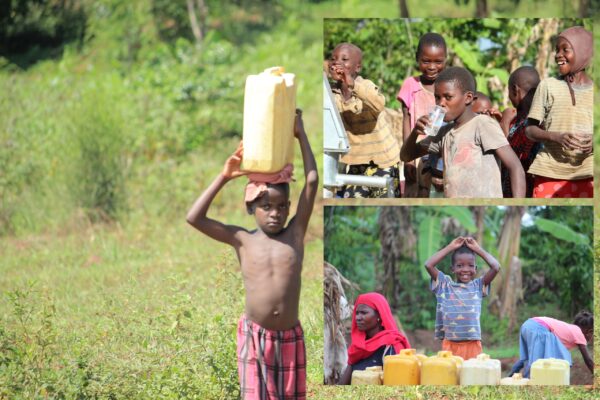
Imagine the impact of your donation. A village well, built through your generosity, becomes a source of life for generations to come. Women and children no longer have to walk for hours to collect water, allowing them to pursue education and income opportunities. The risk of waterborne illnesses diminishes, and overall health improves. This is the power of Sadaqah Jariyah through clean water projects.

Cryptocurrency: A Modern Tool for an Ancient Tradition

The world of charity is evolving, and our Islamic Charity Institution is embracing new technologies to make giving easier and more accessible. Cryptocurrency donations offer a secure, transparent, and efficient way to support clean water initiatives.

Why Choose Us?

Our Islamic Charity Institution has a proven track record of delivering clean water solutions to communities in need. We work with local partners to ensure projects are sustainable and culturally appropriate. When you donate with us, you can be confident your contribution is making a real difference.

Join Us in Securing a Lifeblood

By giving the gift of clean water, you’re not just fulfilling a religious obligation, you’re contributing to a healthier, more prosperous future for all. Explore our website to learn more about our clean water projects and how you can make a lasting impact through Sadaqah Jariyah with cryptocurrency or traditional methods.

CryptocurrencyFood and NutritionIbadah / Acts of WorshipReligionWhat We Do