

Meaning of Endowment in Islam and the Origin of the Word Waqf
Endowment (waqf) (Arabic: الوقف), to allocate some property to be used, whether the very property or its profit, by certain people or for a public cause. Endowment is among Islamic contracts and is to give a physical property for using its benefits with nothing to receive in return. The word “waqf” is not mentioned in the Qur’an; but, many hadiths have mentioned its recommendation and have explained its rules. Endowment can be made for a certain person or group, or for a general purpose and for all people.
In fiqh terminology, it means blocking a property and allowing others to have its benefits or usages without receiving anything in return. Blocking the property here means that after making the endowment, the transfer and wastage of the property will be prevented and its benefits will be used for the intended purpose. Therefore, sometimes, the endowment is called “running charity or Sadaqah Jariyah”, because its benefits remain forever. Endowment has four elements:
- Formula, is the wording which implies the endowment.
- The endower, is the person who endows his property and receives no interest or anything in return for himself.
- A person, persons or purpose for which the endowment is made.
- The physical endowment: is the property or capital which is endowed.
Significance of Endowment
In the Qur’an, there is no verse implying the endowment. But, in books known as Ayat al-ahkam (verses of ruling), endowment is introduced in the level of sukna (using the benefits of a property for a certain period of time), charity, gift, etc. and it is categorized under general titles of “perfect gifts” (a property given in return for nothing). For example, in verse 92 of Qur’an 3, we read, “You will never attain piety until you spend out of what you hold dear”. For the significance of endowment they also refer to verse 20 of Qur’an 73 and verse 177 of Qur’an 2.
“Righteousness is not in turning your faces towards the east or the west. Rather, the righteous are those who believe in Allah, the Last Day, the angels, the Books, and the prophets; who give charity out of their cherished wealth to relatives, orphans, the poor, needy travellers, beggars, and for freeing captives; who establish prayer, pay alms-tax, and keep the pledges they make; and who are patient in times of suffering, adversity, and in the heat of battle. It is they who are true in faith, and it is they who are mindful of Allah.” (Qur’an 2:177)
In hadiths, endowment is mentioned explicitly; while, in hadith collections, the word “sadaqa” (alms) is common and the word “waqf” is used less. Hadiths about endowment are generally divided in two categories:
- Hadiths about the recommendation of endowment
- Hadiths about the rules of endowment
In this hadith, the Prophet Muhammad has explained well how to endow and the conditions of endowment. This hadith is about Umar who has a piece of land and wants to use it in the best way and, as suggested by the Prophet, he ends it with endowment:
Umar bin Khattab got some land in Khaibar and he went to the Prophet (ﷺ) to consult him about it saying, “O Allah’s Messenger (ﷺ) I got some land in Khaibar better than which I have never had, what do you suggest that I do with it?” The Prophet (ﷺ) said, “If you like you can give the land as endowment and give its fruits in charity.” So Umar gave it in charity as an endowment on the condition that would not be sold nor given to anybody as a present and not to be inherited, but its yield would be given in charity to the poor people, to the Kith and kin, for freeing slaves, for Allah’s Cause, to the travelers and guests; and that there would be no harm if the guardian of the endowment ate from it according to his need with good intention, and fed others without storing it for the future.” (Sahih al-Bukhari 2737)
Types of Endowments
Based on purposes specified for endowment, it is divided to three types:
- Endowment for specified person or persons
- Endowment for general titles such as poor people
- Endowment for a certain purpose and cause: such as preaching Islam, helping single mothers, and supporting orphans.
In the books of fiqh, endowments are divided into two types of private and general and they put the above examples under one of the two types; because, sometimes an endowments is made for one certain person or group and sometimes for a general purpose or all people.
Endowment Rules
Endowments comprise a chapter in jurisprudence, in the section of transactions. Most important rules of endowment are:
- The endower should be mature, free and having free will and should not be prohibited from using his properties.
- Formula of the endowment should be mentioned using words close to the intention of the endowment; and it is to note that, for the formula of endowment, no certain words are instructed.
- Some jurists have regarded endowment in the same level with the acts of worship and have considered the intention to become close to Allah (God), a required condition. However, some believe that an endowment can also be accepted from a disbeliever and the intention to become close to God is in order to receive rewards for it.
- The extent of the endowed property should be clarified. Thus, endowing a part of the properties without mentioning its exact amount is not valid.
- The one for whom the endowment is made should be specified; therefore, endowing for some people without exactly specifying them is not permissible.
- Endowment is valid when the endowed property remains for a considerable period of time. Therefore, endowing the fragrance of a flower, etc. is not valid.
- Time-limited or conditioned endowment is void.
- It is permissible to endow books, weapons, etc. in a manner that they remain and their benefits would be used.
- Endowing with the intention of assisting sinning is not permissible.
- If an endowment is made for Muslims, it means that all those who have uttered Shahadatayn can use it.
- If an endowment is made for people such as one’s relatives, close people, etc., their extent is based on the the view of common people.
- Before the endowment is handed over to the one for whom the endowment is made, the property belongs to the endower. If the endower dies before handing over the endowment to the one for whom the endowment is made, what he intended to endow will be held by his heirs and the endowment will be canceled.
- The endower can assign himself or another as the supervisor of the endowment and this person is called “custodian”. Also, the endower can assign a person as the supervisor over the custodian and determines the extent of the supervisor’s privileges.
- If the endower sets the condition that in case of necessity, the endowed property should return to him, the endowment is invalid; but, his action is considered as “blocking the property” and if it is done with the intention of closeness to God, it will have rewards.
- The endowment of a mosque is accomplished when people perform prayer there. Also, the endowment of a grave is accomplished when a dead person is buried there. An endowed property cannot be sold.
- If an endowed property is about to be damaged or is actually damaged, it is permissible to sell and replace it with a better property which has more benefits for the one for whom the endowment is made.
How Can You Endowment Cryptocurrency?
At Islamic Donate Charity, establishing a Waqf with your digital assets is simple, secure and deeply impactful. We transform your cryptocurrency donations into sustainable, life-changing resources that provide ongoing support for those in need.
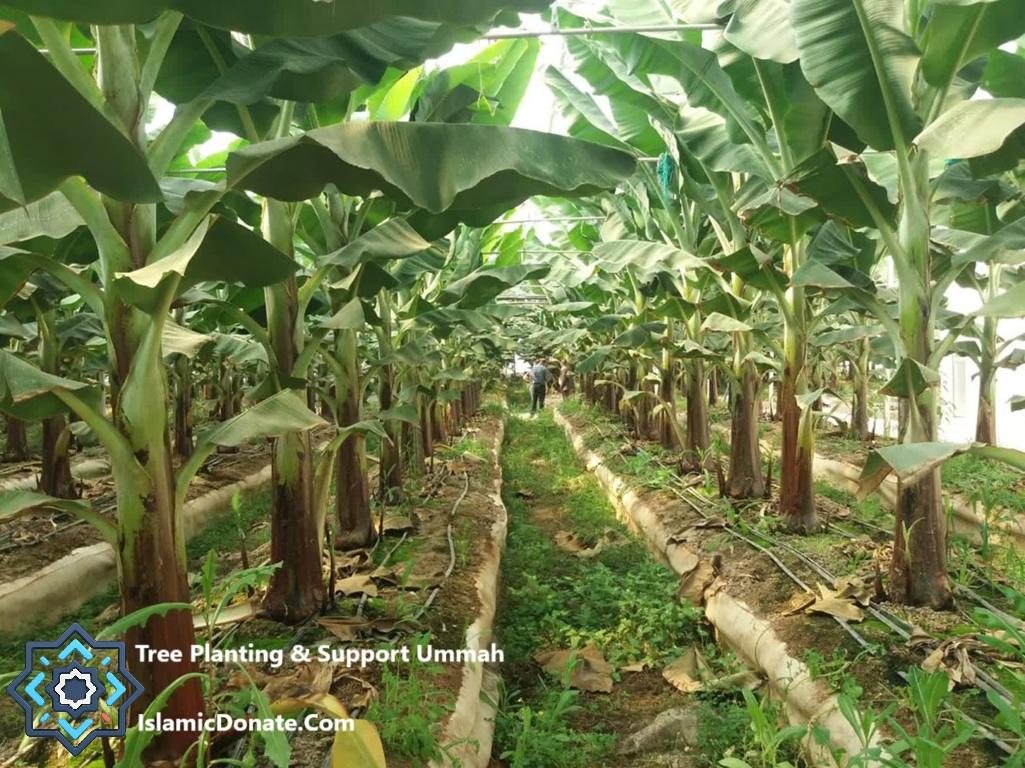
To clarify the process, let’s go ahead with an example. You want to donate 10 Bitcoins. According to the rules, the profit from the income of this property can be used for the needy and poor. So how is this possible? You can donate these 10 Bitcoins based on ongoing charity for agriculture or a water well or planting trees. We will turn your Bitcoins into quality agricultural land for poor families, a water well in a remote village or a date garden for orphans. When you endow your digital assets (BTC, ETH, BNB, SOL, LTC, XRP, USDT, USDC, and etc.), you control the exact nature of your impact. You select the intention of your Waqf directly on our platform, and we bring your vision to life.
Cryptocurrency Endowment
We hope that you will be aware today and endow your cryptocurrency to the needy in the Islamic community so that Allah will return it to you 70 times in Paradise.