

What is the Perfect Suhoor? A Guide to Sustained Energy and Hydration for Ramadan
Ramadan arrives with a distinct atmosphere. We feel the anticipation in the air, a mix of spiritual excitement and the quiet, physical preparation required for the month ahead. At Islamic Donate Charity, we often talk about filling the hearts of others, yet we must also discuss how to properly fuel our own bodies to sustain that worship.
Many of us ask the same question every year. What should I actually eat before dawn to avoid that mid-day crash? How do I stop the thirst that hits by noon?
This year, we want to look at Suhoor differently. We are blending the wisdom of Islamic tradition with modern nutritional science to give you a blueprint for a powerful, energetic fast. Whether you are facing the humid heat of the tropics or the daunting daylight hours near the poles, this guide belongs to you.
Why Suhoor Matters: Bridging Tradition and Metabolism
We often view the pre-dawn meal as a simple deadline to beat the clock. However, the Prophet Muhammad (peace be upon him) described Suhoor as a blessing. This meal distinguishes our fast and provides the physical stamina required for spiritual endurance.
From a physiological perspective, skipping this meal triggers a stress response in the body. Your metabolism slows down to conserve energy, leading to lethargy, brain fog, and irritability. We want to avoid that. The goal is to stabilize blood sugar levels from dawn until sunset.
When we consume simple sugars like white bread or sugary cereals, our insulin spikes and then crashes rapidly. This leaves us hungry within hours. We need to shift our focus toward “slow-burning” fuels. These are foods that release energy gradually, keeping you alert and capable of handling your daily responsibilities, including your charitable efforts.
The Hydration Strategy: Surviving the Thirst in Extreme Climates
Thirst acts as the hardest challenge for most fasting Muslims. This reality hits harder for our brothers and sisters living in tropical zones or areas with extended daylight hours, where fasting can last 12 to 14 hours or more.
Drinking three liters of water in five minutes before the Adhan calls is not the solution. Your body cannot absorb that volume instantly; it will simply flush it out. Effective hydration begins the night before and relies on eating your water.
Cellular Hydration and Electrolytes
Water needs a reason to stay inside your cells. Electrolytes like potassium, magnesium, and sodium provide that anchor. Without them, water passes straight through you.
Potassium is your best friend. Foods rich in potassium counteract the sodium that dehydrates you. We recommend incorporating these powerhouses into your morning routine:
- Avocados: A nutritional goldmine containing healthy fats and massive amounts of potassium.
- Coconut Water: Nature’s electrolyte drink. It hydrates better than water alone.
- Yogurt: Provides calcium and water content, along with probiotics to aid digestion.
The Danger of the “Salty” Suhoor
We must actively avoid high-sodium foods during Suhoor. Pickles, salty cheeses, processed meats, and instant noodles act like sponges, soaking up your body’s water reserves and triggering intense thirst. If you live in a hot climate, this is critical. A high-salt meal can ruin your fast before it truly begins.
The Ultimate Suhoor Diet Plan: What to Put on Your Plate
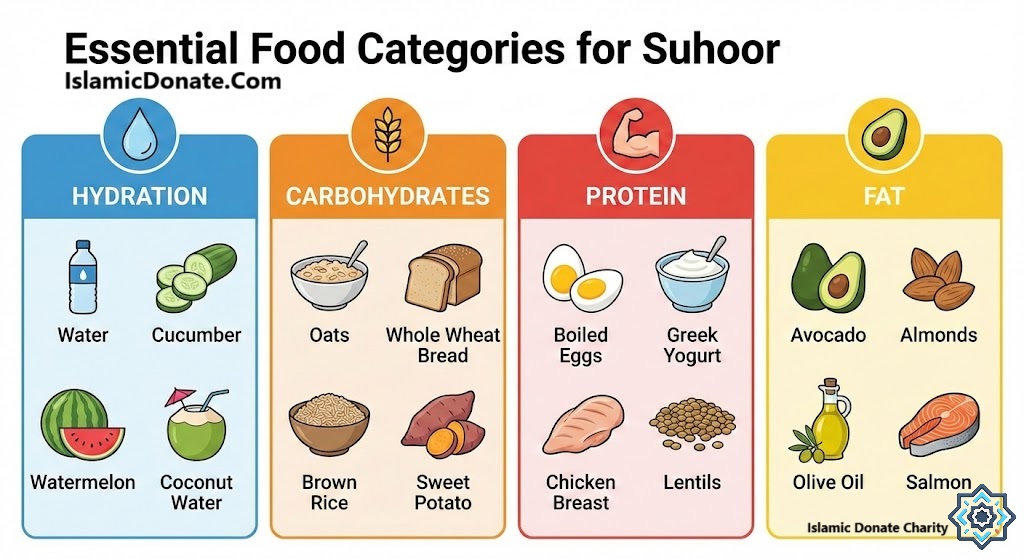
We have crafted a nutritional framework designed to keep you full and focused. This plan prioritizes complex carbohydrates, lean proteins, and healthy fats.
1. The Foundation: Complex Carbohydrates.
We choose carbohydrates with a low Glycemic Index (GI). These break down slowly.
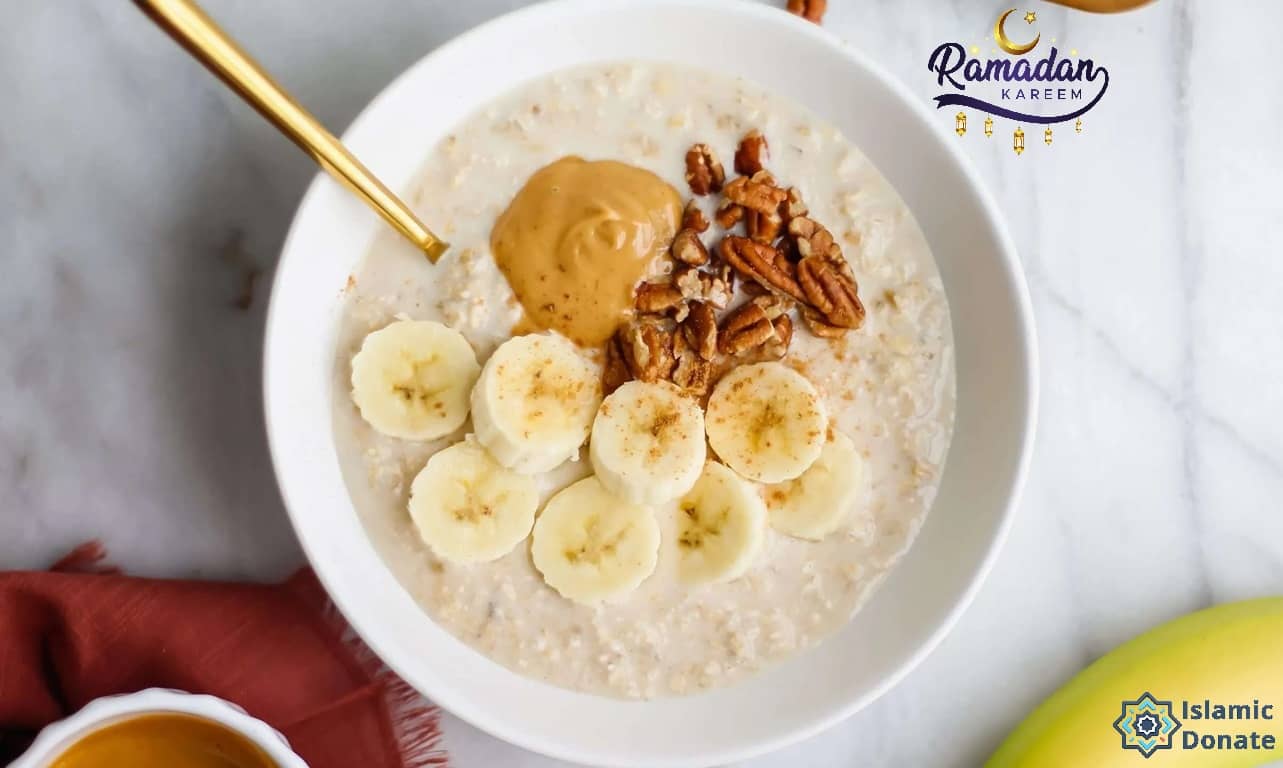
- Oats and Oatmeal: A classic for a reason. They expand in the stomach to keep you full and release energy slowly.
- Quinoa: A protein-packed grain that offers sustained endurance.
- Whole Grain Bread: Avoid white flour. Look for seeded, dense loaves.
2. The Sustainer: Protein.
Protein suppresses the “hunger hormone” ghrelin.
- Eggs: Boiled or poached eggs provide high-quality protein.
- Greek Yogurt: Higher in protein than regular yogurt and excellent for digestion.
- Beans and Lentils: A staple in many cultures, providing fiber and protein simultaneously.
3. The Satiety Factor: Healthy Fats.
Fat digests slowly, delaying the emptying of the stomach.
- Nuts and Seeds: Walnuts, almonds, and chia seeds.
- Olive Oil: Drizzle this over your food.
- Nut Butters: Peanut or almond butter on whole-wheat toast.
A Sample Menu for Long Fasting Days
Here is a practical combination you can try tomorrow morning:
- The Power Bowl: Start with a base of cooked oatmeal or quinoa. Stir in a spoonful of chia seeds (which absorb water and keep you hydrated). Top with sliced banana or dates for potassium, a handful of walnuts for brain health, and a dollop of unsweetened Greek yogurt.
- The Savory Option: Two poached eggs on a slice of whole-grain toast. Add half an avocado on the side. Drink a glass of water with a squeeze of lemon to balance your pH levels.
Simplicity is Strength: Accessible Nutrition for Every Budget
We must recognize a vital truth: healthy fasting does not require expensive ingredients or luxury superfoods. At Islamic Donate Charity, we know that true vitality comes from simple, whole foods that have sustained our communities for generations. Nutrition is a right, not a luxury, and we can achieve optimal energy levels without straining our wallets. Perhaps even some of you, dear readers, are looking for a moderate but complete diet plan.
Many of the most nutritious foods on the planet are also the most affordable. We should not feel that we are missing out if our kitchen does not contain imported seeds or expensive fruits. In fact, simplicity often brings the most nutritional density and digestive ease. We want you to focus on the basics that provide the highest return on investment for your body. The goal is to maximize fiber and protein, which are readily available in everyday staples.
The Economical Suhoor Plan: High Energy, Low Cost
We have designed this plan for families and individuals managing a tight budget. These options prioritize satiety and hydration using accessible, everyday ingredients found in local markets.
1. The Legume Powerhouse (Lentils and Beans).
Legumes are the champion of budget nutrition. They are packed with fiber, which regulates blood sugar, and protein to keep you full.
- The Meal: A bowl of warm lentil soup (Daal) or stewed fava beans (Ful).
- The Pairing: Eat this with whole-wheat bread or Roti. The combination creates a complete protein profile that rivals meat at a fraction of the cost.
2. The Humble Egg and Potato.
Potatoes often get a bad reputation, but when boiled (not fried) and eaten with the skin, they are an excellent source of potassium and energy.
- The Meal: One or two hard-boiled eggs mashed with a boiled potato. Season with a little salt and pepper.
- The Benefit: The eggs provide the protein spike, while the potato releases energy slowly throughout the morning.
3. Nature’s Hydration (Cucumber and Banana).
You do not need expensive coconut water to stay hydrated.
- The Side: Cucumbers are 95% water and very affordable. Eat half a cucumber with every Suhoor to store water in your digestive tract.
- The Fruit: Bananas are significantly cheaper than berries or avocados but are superior for preventing muscle cramps and fatigue due to their high potassium content.
4. Traditional Oats Bulk oats are incredibly cheap and effective.
- The Meal: Cook oats with water or milk. If honey is too expensive, use fresh fruit slices or a few raisins to sweeten it naturally. This dish acts as a slow-release energy capsule for your day.
By focusing on these “power staples,” we ensure that every member of our community, regardless of financial status, can face the fasting day with strength, dignity, and endurance.
Integrating Modern Generosity: The Role of Cryptocurrency Donate
As we nourish our bodies, we naturally think of those who have no Suhoor to wake up to. Hunger teaches us empathy. It reminds us of the fragility of the human condition. At Islamic Donate Charity, we witness this reality daily.
The way we alleviate this hunger has evolved. We have embraced technology to make giving as efficient and impactful as possible. We now facilitate Cryptocurrency Donate options.
Why crypto? It offers speed and transparency. When you donate using digital assets, the aid reaches the destination faster, bypassing traditional banking delays and high fees. This ensures that 100% of your intention translates into food, water, and shelter for those in need.
Blockchain technology allows us to maintain a transparent ledger. You can see exactly how we utilize your contributions. For a tech-savvy generation, Cryptocurrency Donate represents the perfect marriage of Islamic values and modern efficiency. It allows us to transfer wealth across borders instantly to areas where banking infrastructure has collapsed.
We accept various digital currencies because we believe in removing friction from the act of charity. Whether you hold Bitcoin, Ethereum, or other assets, your digital wallet can become a tool for immense social good.
Donate Food in Ramadan
Final Thoughts: A Balanced Approach
Ramadan creates a beautiful rhythm in our lives. We wake when the world sleeps. We eat with intention. We abstain to purify our souls.
By optimizing your Suhoor with hydrating foods and slow-burning energy sources, you respect the vessel (your body) that allows you to worship. You make the fast easier on yourself physically so you can challenge yourself spiritually.
And when that hunger pang hits you at 4:00 PM, let it serve as a reminder. Let it connect you to the millions who fast without a breaking meal. Let it inspire you to open your digital wallet and make a difference through Islamic Donate Charity.
We are here with you on this journey. We eat together, we pray together, and we give together. May your fast be easy, your energy high, and your deeds accepted.