

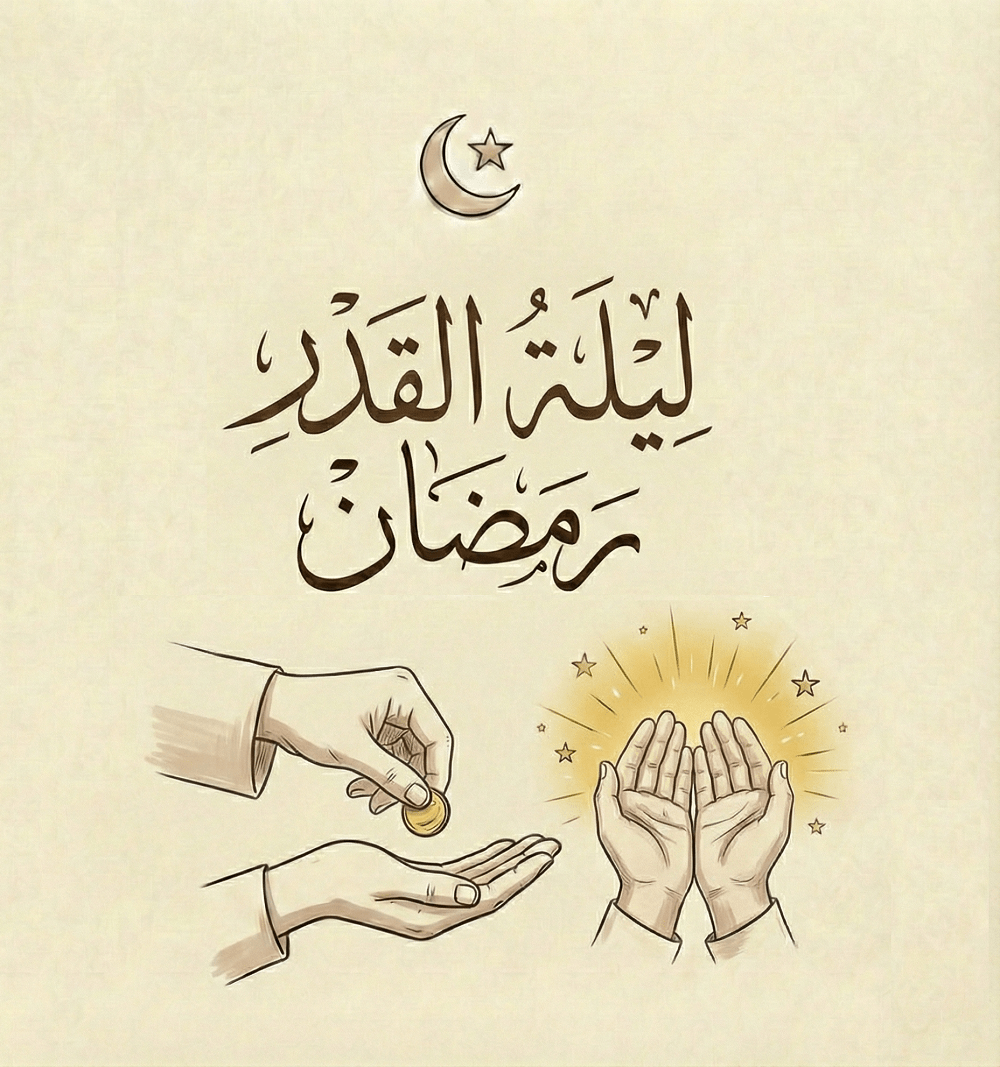
The Night of Destiny (Laylat al-Qadr)
Qadr is an Arabic word meaning measure and destiny. The Night of Destiny (Laylat al-Qadr) marks the revelation of the Quran and the determination of human affairs for the coming year. It is considered the most superior night of the year, characterized by Allah’s mercy and forgiveness. During this night, angels descend to earth. According to Shiite traditions, they present the affairs of the upcoming year to the Imam of the time.
The exact date of Laylat al-Qadr is not explicitly stated. However, narrations indicate it occurs during the month of Ramadan, most likely on the 19th, 21st, or 23rd night. Shiite Muslims place greater emphasis on the 23rd night, while Sunni Muslims typically emphasize the 27th. Following the example of the Infallibles (peace be upon them), Shiite Muslims stay awake during these nights to recite the Quran, offer supplications, and perform acts of worship. The fact that Imam Ali (peace be upon him) was struck with a poisoned sword and subsequently martyred during these nights adds significant importance for Shiite Muslims, making mourning a central part of their observance.
Position and Importance of Qadr
Laylat al-Qadr holds the highest rank in Islamic culture. According to a narration from the Holy Prophet (peace be upon him and his progeny), this night is a unique gift to Muslims, unseen by previous nations. An entire chapter of the Quran, Surat al-Qadr, is dedicated to praising it. This chapter states that the Night of Destiny is more valuable than a thousand months. Imam al-Baqir (peace be upon him) explained that good deeds performed on this night are better than those performed over a thousand months without a Night of Destiny. The first six verses of Surat al-Dukhan also emphasize its significance.
Imam al-Sadiq (peace be upon him) stated that Ramadan is the best of months, and its heart is the Night of Destiny. Similarly, the Holy Prophet referred to it as the chief of nights. Jurisprudential sources note that the days following these nights are equally valuable.
Some traditions state that Lady Fatima (peace be upon her) is the secret of the Nights of Qadr. The Holy Prophet highlighted her exalted rank by stating that her happiness is his happiness, and her sadness is his sadness. Consequently, Allah’s pleasure and wrath align with hers. To fully perceive the Night of Qadr, believers often seek intercession through Lady Fatima. One method of honoring her is by maintaining a connection to Ashura, which links believers to Amir al-Mu’minin, Imam Ali (peace be upon him).
The Revelation of the Quran
The first verse of Surat al-Qadr and the third verse of Surat al-Dukhan indicate that the Quran was revealed on the Night of Destiny. Islamic scholarship outlines two methods of revelation for the Quran:
Complete revelation all at once on a specific night.
Gradual revelation over the twenty-three years of the Holy Prophet’s mission.
Allamah Tabatabai, a prominent Quranic exegete, explained that the Quran has an esoteric reality and an exoteric form. On the Night of Qadr, the Quran was revealed entirely in its esoteric reality to the heart of the Holy Prophet. Subsequently, it was gradually revealed in its exoteric, verbal form over time, corresponding to different circumstances and events.
The Determination of Affairs
Imam al-Baqir explained verse four of Surat al-Dukhan by noting that the destiny of every person for the coming year is written on this night. Allamah Tabatabai added that God determines matters such as life, death, sustenance, happiness, and misfortune during Laylat al-Qadr. Because this night heavily influences human fate, believers dedicate themselves to supplications, worship, and good deeds to seek a favorable destiny.
The Descent of Angels
Verses from Surat al-Qadr state that angels and the Spirit (Ruh) descend to earth on this night every year, from the beginning of creation until the end of the world. Shiite narrations specify that they present the fates of the coming year to the infallible Imam of the era. This necessitates the presence of an infallible Imam in every age. In contemporary times, this refers to Imam Mahdi (may Allah hasten his reappearance), the successor of the Holy Prophet and the master of the Night of Destiny.
Forgiveness of Sins in Qadr
Islamic sources describe the Night of Destiny as a time of immense mercy and forgiveness. During this time, Satan is restrained, and the doors of heaven are open. The Holy Prophet stated that anyone who stays awake on the Night of Qadr, maintaining faith in God and the Day of Judgment, will have all their sins forgiven.
Acts of Worship and Rituals
Muslims worldwide spend extended time in mosques and places of worship during these nights. They remain awake until dawn, engaging in recommended acts of worship at home, shrines, or Hussainiyas (congregation halls). Key practices include:
Reciting the Quran and holding it on one’s head.
Offering specific prayers and seeking forgiveness.
Attending lectures by religious scholars.
Reciting the supplication of Ashura.
Praying for the reappearance of Imam Mahdi and the resolution of people’s hardships.
A prominent ritual is the recitation of Jawshan al-Kabir, a supplication transmitted from the Holy Prophet. It contains 1,000 sections and 1,001 names and attributes of Allah, mostly drawn from the Quran. The supplication is rhythmic and eloquent. Each section concludes with a plea for salvation: “Praise be to You, there is no god but You, [I beseech you for] relief, relief, Protect us from the Fire, O Lord.”
Secondary community practices on these nights include providing Iftar (the evening meal) and Suhoor (the pre-dawn meal), fulfilling vows, performing good deeds on behalf of the deceased, feeding those in need, and assisting in the release of prisoners incarcerated for involuntary or forgivable offenses.
Feeding the Needy