

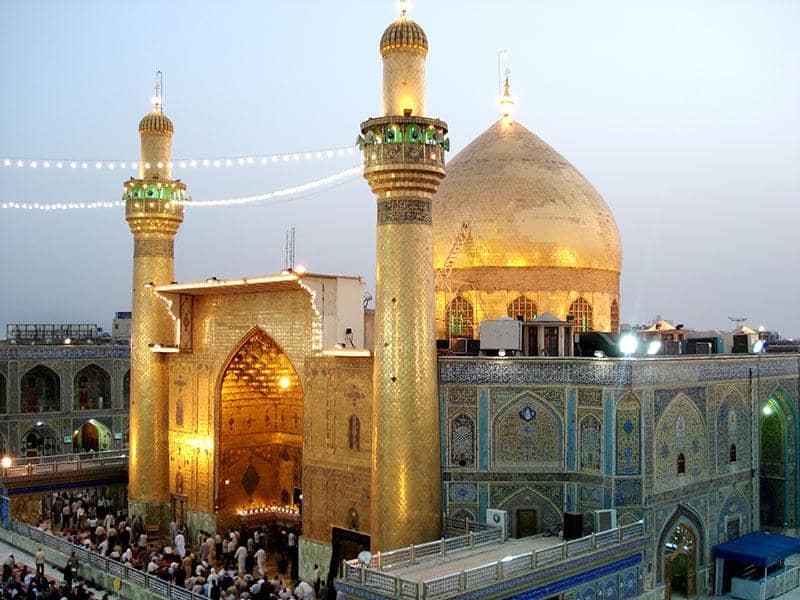
Who Was Imam Ali? The Legacy of the Guardian of the Poor
Amir al-mu’minin Ali ibn Abi Talib was the cousin, son-in-law, and Vicegerent of the Holy Prophet Muhammad. Renowned as the first male to accept Islam, he is celebrated historically for his unparalleled wisdom, unyielding justice, and profound compassion for the poor. He served as the 4th Caliph and the 1st Imam, setting a timeless standard for spiritual leadership and humanitarian service.
The Search for True Leadership
In a world often defined by inequality and the hoarding of wealth, we look to history for figures who broke the mold. We search for leaders who didn’t just rule, but served. We look for those who possessed absolute power yet lived in the simplest poverty to ensure their people were fed.
Imam Ali is that figure.
His life was not merely a series of historical events; it was a blueprint for human perfection, courage, and radical generosity. For the modern philanthropist, understanding Imam Ali is understanding the very root of selfless giving.
The First Protector: A Bond Beyond Blood
Ali’s connection to the Holy Prophet was forged in destiny. Born ten years before the prophetic mission began, Ali was not just a cousin; he was a son in spirit.
During a severe famine in Mecca, the Prophet brought the six-year-old Ali into his own home to relieve the burden on his uncle, Abu Talib. This created an inseparable bond. When the first Divine revelation descended upon the Prophet in the cave of Hira’, Ali still a young boy was the first to see the light of prophecy. He did not hesitate. He did not doubt. Ali was the first man in history to accept Islam, marking him as the first among followers to have never bowed to an idol.
The Night of Sacrifice
True loyalty is proven in danger. When the infidels of Mecca surrounded the Prophet’s home, plotting to assassinate him in his sleep, a decoy was needed. Ali stepped forward.On the night of the migration to Medina (hijrah), Ali slept in the Prophet’s bed using his blanket. He risked being cut to pieces so that the Prophet could escape to safety. This act of valor allowed Islam to survive and flourish.
The Warrior Saint: Strength Tempered by Mercy
Ali’s courage was proverbial. History records that no warrior ever engaged Ali in single combat and survived.
- The Battle of Khaybar: Histories confirm that during the siege, Ali marched to the fort, tore the massive gate from its hinges with a single sudden motion to use as a shield, and cast it aside a feat physically impossible for an ordinary man.
- Breaking the Idols: Upon the conquest of Mecca, it was Ali who climbed onto the Prophet’s shoulders to topple “Hubal,” the giant stone idol atop the Ka’bah, shattering the symbol of ignorance.
Yet, his strength was matched only by his chivalry. He never pursued a fleeing enemy. He never attacked by surprise. He never cut off water supplies. Even in war, he remained a guardian of ethics.
The “Gate of Knowledge” and Spiritual Renewal
Beyond the battlefield, Ali was the intellectual giant of his era. The Prophet famously declared:
“I am the City of Knowledge, and Ali is its Gate.”
He was a pioneer in metaphysics (ma’arif-i ilahiyah) and established the rules of Arabic grammar to preserve the Quran’s integrity. His discourses opened the doors to logical demonstration in theology. During his Caliphate (lasting nearly four years and nine months), he did not seek to expand the empire’s borders, but to expand its soul. He focused on spiritual renewal and internal reform, ensuring that justice was blind to status or wealth.
The Alms of Ali: The Original Endowment
This is the chapter of his life that speaks loudest to us today. Ali was not a recluse who ignored the world. He was a worker. He loved agriculture. He spent his days digging wells with his own hands, planting trees, and cultivating barren fields. But here is the distinction: He kept none of it.
Every well he dug, every field he cultivated, he immediately established as an endowment (waqf) for the poor. By the end of his life, these endowments known as the “Alms of Ali” were generating twenty-four thousand gold dinars. He gave it all away to the needy, while he himself lived on barley bread, dressing in the simplest clothes. He proved that wealth is not evil; hoarding it is. Wealth is a tool to liberate others from suffering.
Why Your Crypto Donation Honors This Legacy
Imam Ali’s life teaches us that transparency, speed, and direct action are the pillars of charity. He delivered food to the poor at night, on his own back, ensuring it reached those who needed it most.Today, blockchain technology allows us to replicate this level of direct, transparent giving.
- The Modern “Waqf” (Endowment): Just as Ali turned land into perpetual charity, you can turn digital assets into perpetual impact. Cryptocurrency is the most efficient vehicle for modern philanthropy.
- Radical Transparency (Truth): Ali famously said, “Ali is never separated from the Truth.” Blockchain is built on the immutable truth of the ledger. When you donate crypto, you ensure that funds are tracked and verified, eliminating the darkness of corruption.
- Immediate Aid: Ali did not wait for bureaucracy to feed the hungry. Crypto donations bypass slow banking systems, ensuring aid reaches the ground instantly.
Be the Hand That Gives
Ali ibn Abi Talib left the world with a legacy of perfect humanity. He showed us that the highest station a human can reach is that of a servant to others. We cannot lift the gates of Khaybar, but we can lift the burden of poverty from a child’s shoulders. We cannot turn back time, but we can secure the future.
Don’t let your assets sit idle while the world waits. Convert your compassion into action today.
Convert your compassion into action today
Why is Imam Ali considered a model for philanthropy?
Imam Ali is revered as a model for philanthropy because he did not just give from surplus; he worked manually to create wealth specifically for the poor. He dug wells and cultivated lands, then immediately endowed them as Waqf (charity) for the needy. Despite generating significant income from these lands (up to 24,000 gold dinars), he lived in extreme simplicity, distributing all earnings to orphans and the destitute.
What was the relationship between Imam Ali and Prophet Muhammad?
The relationship was profound and multifaceted. Ali was the Prophet’s cousin and was raised in the Prophet’s household from the age of six. He was the first male to accept Islam, the husband of the Prophet’s daughter Fatimah, and was declared by the Prophet as his brother, vicegerent, and the “Gate” to the city of knowledge. Ali risked his life for the Prophet, notably sleeping in his bed during the migration to Medina.
How does donating cryptocurrency align with the values of Imam Ali?
Donating cryptocurrency aligns with Imam Ali’s values of “Haqq” (Truth) and direct action. Just as Imam Ali personally delivered aid to ensure it reached the needy without delay or corruption, blockchain technology offers an immutable, transparent ledger that ensures donations are tracked and used correctly. It champions the speed and honesty that Ali prioritized in his governance and charity.
Give Sadaqah Online