

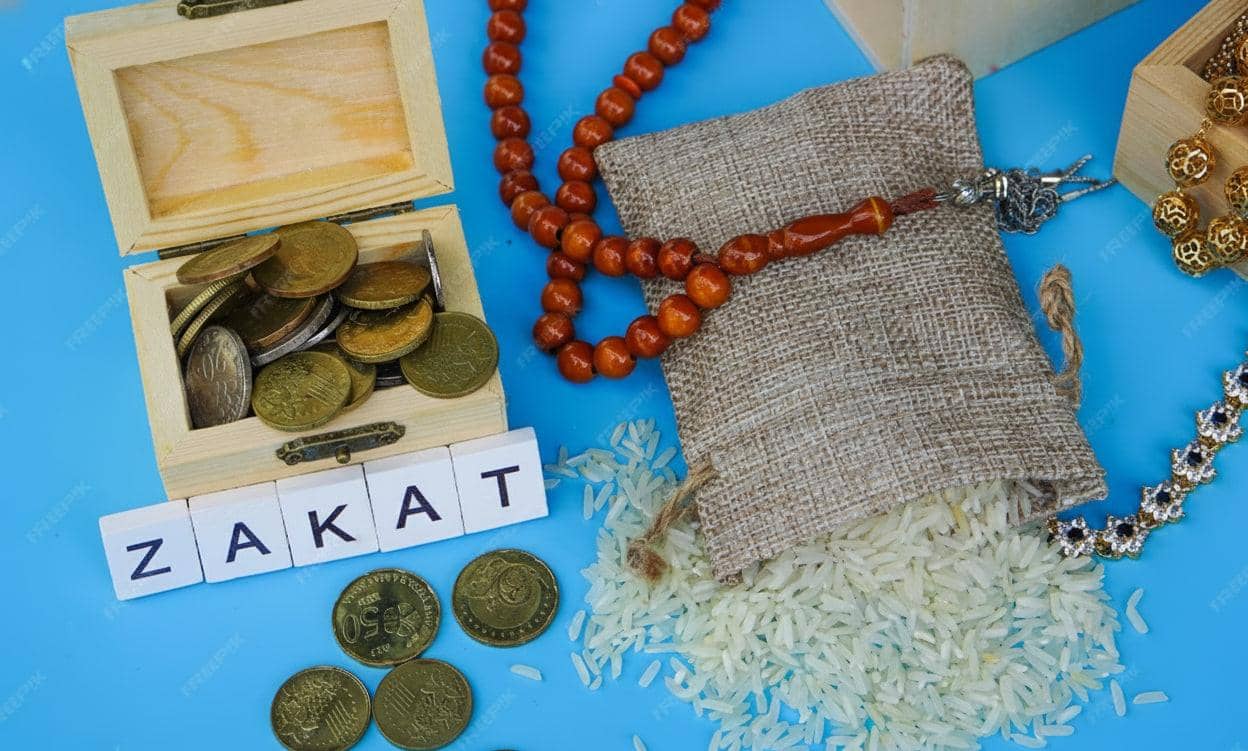
What is Zakat al-Fitra?
Zakat al-Fitra (also known as Fitrana or Zakat al-Fitr – Arabic: زكاة الفطر) is a mandatory charitable contribution paid by Muslims at the end of Ramadan. It is unrelated to net wealth; rather, it is a levy on the person. Every head of a household must pay the equivalent of approximately 3 kg (one Sa’) of staple food for themselves and every dependent to ensure the needy can celebrate Eid al-Fitr.
From Fasting to Feasting: Completing Your Spiritual Journey
Imagine the morning of Eid. The prayer has finished, and families are gathering around tables laden with food to celebrate a month of spiritual discipline. Now, imagine a family just down the street, or perhaps in a war-torn region halfway across the world. Their table is empty. The laughter of Eid is silenced by the growl of hunger.
This disparity is exactly what Zakat al-Fitra is designed to eradicate.
For the past month, you have fasted to purify your soul. But according to Islamic jurisprudence, your fasting remains “suspended between heaven and earth” until this final duty is discharged. Zakat al-Fitra is not just a tax; it is the spiritual seal on your Ramadan. It saves the poor from the humiliation of begging on a day of celebration, and it purifies the giver from any idle speech or minor transgressions committed during the fast.
Today, technology allows you to bridge the gap between your wealth and their need instantly. By understanding the rules and utilizing modern payment methods like cryptocurrency, you can ensure your Fitrana reaches those who need it most, exactly when they need it.
The Deeper Meaning: Why We Pay
To understand the obligation, we must understand the intent. The term “Fitra” carries profound meanings in Islamic tradition:
- The Creation: It is a charity for your very existence. Just as you protect your physical body from harm, Zakat al-Fitra is described in narrations as a shield that saves the body from calamities and death in the coming year.
- The Purification: It acts as a spiritual “cleanse” for the Fast of Ramadan, patching up any spiritual holes left by minor mistakes or negativity during the holy month.
- The Pillar: It fortifies the structure of your faith.
As Imam al-Sadiq (a) famously said, paying this Zakat is as essential to fasting as the Salutations to the Prophet (s) are to the daily Prayer. One is incomplete without the other.
In Narrations
- Imam al-Sadiq (a) was asked about the exegesis of this verse, “Felicitous is he who pays zakat”; he replied, “it means the one who pays zakat al-fitra”. Then they asked about the exegesis of the following verse, “and [the one who] celebrates the Name of his Lord, and prays.” The Imam replied: “it means the person who goes to the desert (outdoors) then prays (the eid prayer).”
- Imam al-Sadiq (a) said, “(one) of the complements of fasting (or the sign of fasting’s completion), is paying zakat, (that is, zakat al-fitra) like the way sending salutation to the Prophet (s) is the complement of prayer; for whoever fasts but does not pay zakat, there’s no fasting for him if abandons it willfully; and whoever abandons salutation to the Prophet (s), there’s no prayer for him. Almighty God has placed zakat before prayer and said: ‘Felicitous is he who pays zakat, and celebrates the Name of his Lord, then prays’.”
- Imam ‘Ali (a) says: whoever pays zakat al-fitra, Almighty God will compensate by it whatever (amount) he has skimped of his zakat.
- Imam al-Sadiq (a) says, “whoever ends his fasting with nice words or nice actions, Almighty God will accept his fasting.” People asked: “O, son of the Apostle of God! What is the nice word?” He replied: “attestation that there’s no god (literally: person or deity deserving worship) but Allah and the nice action is paying zakat al-fitra.”
- Imam al-Sadiq (a) told Mut’ab, his deputy, “go and give zakat al-fitra for each person who is in our household and don’t forget anyone, for if you forget anyone, I fear of missing for that person.” “What is missing?” Mut’ab asked, Imam (a) replied, “Death”.
Who is Obligated to Pay?
The rules of Zakat al-Fitra are specific to ensure the responsibility falls on those capable of bearing it.
The primary obligation falls upon the Head of the Household. If you are an adult, sane, and financially independent (meaning you are not “poor” by Sharia definition), you must pay for:
- Yourself.
- Your immediate family (spouse, children).
- Any dependents living in your home (parents, servants).
- Guests who arrive before sunset on the last day of Ramadan and stay the night (subject to specific jurisprudential details).
The Definition of “Needlessness”
You are required to pay if you possess “actually or potentially” sustenance sufficient for one year for yourself and your family. If you live paycheck to paycheck but can cover your expenses for the year, you are obligated. Conversely, the recipients of this Zakat are the poor: those who lack this annual financial security.
Calculation: Type and Amount
Unlike Zakat on wealth (which is 2.5%), Zakat al-Fitra is based on food.
The Golden Rule: One Sa’ (Approx. 3KG)
The obligatory amount is one Sa’ of the region’s staple food. This is traditionally calculated as approximately 3 Kilograms (6.6 lbs).
Accepted Food Items:
- Wheat or Barley
- Dates or Raisins
- Rice or Corn
- Other staple foods common to the region (e.g., milk or curd in some traditions).
Paying in Cash or Crypto
While the basis is food, Islamic scholars universally agree that paying the monetary equivalent is permissible and often preferred. This allows charity organizations to buy food in bulk or allow the poor to purchase exactly what they need.
How to Calculate:
Check the current market price of 3kg of rice or wheat in your area (or the area you are sending money to).
Example: If 1kg of high-quality rice is $2.00, your Zakat al-Fitra is $6.00 per person in your household.
Critical Timing: When to Pay
Timing is everything. The window for Zakat al-Fitra is narrow to ensure the food reaches the needy before the celebration begins.
- Start Time: The obligation begins at sunset on the last day of Ramadan (the eve of Eid).
- The Deadline: It must be paid before the Eid Prayer the following morning.
- The Risk: If you delay it u
- ntil after the prayer without a valid excuse, it is considered a general charity (Sadaqah) rather than Zakat al-Fitra, and the specific spiritual reward may be lost.
Pro-Tip: Many scholars permit paying a few days early, or even from the start of Ramadan, to allow organizations time to distribute the funds.
Why Your Crypto Donation Makes a Bigger Impact
In an era of digital finance, your Zakat can move at the speed of light. Philanthropy is evolving, and donating cryptocurrency is becoming the preferred method for donors who value efficiency and transparency.
- Unmatched Transparency (Trust)
One of the biggest concerns with traditional charity is, “Did my money actually get there?” Blockchain technology offers an immutable ledger. When you donate crypto, you are utilizing a system designed for trust. You can trace the flow of funds, ensuring your Zakat is not lost in bureaucracy. - Speed is Survival
Hunger cannot wait for bank clearings or international wire delays. Cryptocurrency transactions are near-instantaneous. When you send Bitcoin, Ethereum, or stablecoins, the funds arrive in the charity’s wallet in minutes. This speed is vital for Zakat al-Fitra, which has a strict deadline before the Eid prayer. - Lower Fees, More Food
Traditional banking systems and donation platforms often take transaction fees ranging from 3% to 10%. Crypto transactions generally have significantly lower network fees. This means a larger percentage of your “3 Kilograms” actually buys food for the needy, rather than paying for banking infrastructure. - Global Reach
Crypto knows no borders. It allows you to send aid to conflict zones or unbanked regions where traditional banking infrastructure has collapsed. You can fulfill your obligation to the most desperate populations on earth without geographical limitations.
How to Pay Your Zakat al-Fitra Now
The clock is ticking toward Eid. You have the power to purify your fast and feed a family in moments.
- Step 1: Count the number of people in your household (including yourself).
- Step 2: Multiply that number by the cost of 3kg of staple food (approx $10-$15 per person to be safe and generous).
- Step 3: Select your preferred cryptocurrency.
Final Thought
Imam Ali (a) said: “Whoever pays Zakat al-Fitra, Almighty God will compensate by it whatever amount he has skimped of his Zakat.”
Don’t let your Ramadan hang in the balance. Ensure your fast is accepted and your wealth is purified.
Convert Crypto to Compassion